
Buena Park, CA · Orange County
24/7 Mold Remediation in Buena Park, CA
Answering 24/7, including nights and weekends
Answered 24/7
A live person, day or night, weekends and holidays
Insured crews
Licensed where California requires it
Scope and price first
In writing, before any work starts
Source found and fixed
Moisture readings and photos for your file
Mold remediation company · Buena Park
Mold help that starts with the water
A musty back bedroom, a stain that keeps spreading, a baseboard that feels soft, or an air conditioner that smells stale when it kicks on: in Buena Park, each of these usually points to moisture you cannot see yet. Water gets in after winter rain, through a slab leak or a supply line, past a tired roof or window seal, or from condensation around an air handler, and it soaks into drywall, insulation, flooring and framing well before mold shows on the surface.
Buena Park Mold & Water Damage Pros handles the mold side of that problem, and only the mold side. Call (831) 303-1192 and you reach a live person 24 hours a day who can send the nearest available crew for an inspection, testing or removal. The crew finds where the water is coming from, explains what they found before recommending any demolition, and puts the scope and price in writing before work starts. A wipe-down with a spray bottle is not remediation, and nobody on our crews will call it that.
Reviewed by the Buena Park Mold & Water Damage Pros team · Updated · Process references: IICRC S520 (2024), CDPH mold guidance, CSLB contractor rules
What mold remediation means
Mold remediation in Buena Park means finding and fixing the moisture source, documenting which materials are affected, containing the work area so spores and dust stay put, removing or cleaning materials according to their condition, and drying the structure. The EPA's target is to dry wet materials within 24 to 48 hours. A good contractor gives you moisture readings, a written scope, records you can hand to an insurer, and a verification step before anything is rebuilt.
Call (831) 303-1192Services
Mold services for Buena Park homes, rentals and businesses
Seven services, one niche. We handle mold and the moisture behind it, from the first inspection to the final check before walls are closed.
Mold Removal
Contained, room-by-room mold removal for Buena Park homes: bathrooms, slab-edge walls, flooring, attics and HVAC areas. Crews set up plastic containment and HEPA air filtration, remove what cannot be cleaned, clean what can, and point you to the leak behind it. Written scope and price before work starts.
Mold Removal in Buena ParkMold Inspection
For musty smells, unexplained stains and past leaks in Buena Park homes. An inspector checks walls, bathrooms, sink bases and the attic with a moisture meter and thermal camera, then puts the findings, photos and readings in writing. Useful for escrow deadlines and for tenant or landlord documentation.
Mold Inspection in Buena ParkMold Testing
Air and surface sampling for Buena Park homes and rentals, analyzed by a third-party lab. Indoor air is compared with an outdoor baseline, and swab or tape-lift samples show what is growing on a surface. Also used for clearance testing after removal, with the report explained in plain English.
Mold Testing in Buena ParkBlack Mold
Dark growth on drywall, window sills and shower walls is common in Buena Park's 1960s homes. Crews contain the area, remove wet materials, HEPA-clean the framing and trace the water source, with a written scope before work starts. Nobody can name the species by sight, so the plan is based on the damage, not the color.
Black Mold in Buena ParkMold After a Leak
Slab leaks, winter roof leaks and failed appliance lines cause most of the mold in Buena Park homes. Crews map the moisture, dry what can be saved, cut out wet or moldy drywall and flooring under containment, and document everything with photos and readings for your insurance file.
Mold After a Leak in Buena ParkEmergency Mold Removal
Mold after a flood, sewage backup, burst pipe or failed water heater grows fast. A live person answers 24/7 and sends the nearest available crew to contain the area, filter the air and remove what cannot be saved, with the scope and price in writing before work starts.
Emergency Mold Removal in Buena ParkApartment & Rental Mold
Mold remediation for Buena Park landlords, property managers, HOAs and tenants. Crews trace moisture between stacked units, work in occupied apartments behind sealed containment and leave a documented record of photos, moisture readings and a completion report. Hotels, restaurants and shops along Beach Boulevard can be scheduled after hours.
Apartment & Rental Mold in Buena ParkNot sure which one you need?
Tell us what you see or smell. We will point you to the right first step.
(831) 303-1192Why mold shows up in Buena Park homes
Buena Park is dry most of the year, which is exactly why mold catches people off guard. Owners assume it is a beach-city problem. The housing stock says otherwise: the median Buena Park home was built in 1965, roughly 57 percent of homes date from the 1940s through the 1960s, and most are single-story ranch houses poured on concrete slabs. Those details decide where water goes when something fails.
Copper lines under the slab
Original copper supply lines run under the slab in most tract homes here, and Orange County's very hard water (around 15 grains per gallon) wears them from the inside. A pinhole leak under a slab does not flood the house. It wicks up into the bottom of the drywall and under the flooring for weeks, and the first sign is often a musty smell along an interior wall or a baseboard that has started to swell. That is why mold after water damage is the most common job type in this city.
Signs that justify a moisture check rather than another wipe-down:
- A stain that comes back in the same spot, or mold that returns within weeks of cleaning.
- A swollen or separating baseboard, soft drywall near the floor, or vinyl and laminate that has lifted or cupped.
- A musty smell concentrated near a sink cabinet, bathroom wall or water heater closet.
- A water bill that has crept up with no change in use.
A small visible patch rarely shows the whole wet area, so the crew measures above, below and beside it. The written scope keeps the plumbing repair separate from the mold work, and the wall is not closed until a plumber has fixed the line and the readings are back to dry.
Winter storms that find old roofs and windows
Rain arrives in a few heavy bursts, like the atmospheric-river storms of January 2023 and February 2024, after months of sun have dried out roof flashing and window seals. Leaks show up as a ceiling stain in the week after a storm, but the wet insulation and sheathing above it can stay damp much longer. City climate documents flag flood-sensitive areas around Beach Boulevard and Fullerton Creek, and First Street rates about 17.7 percent of Buena Park properties at flood risk over 30 years, concentrated along the Coyote Creek channel.
February is usually the wettest month, averaging about 3.1 inches of rain, and the city's climate assessment counts roughly three extreme rainfall events a year, with modeling that projects four to six by late century. Treat that as planning context, not a forecast for any one house. What matters on a given street is that long dry stretches followed by one hard storm expose every tired seal at once, from roof penetrations without intact ice and water shield to aluminum window frames whose weep holes have clogged.
- After a heavy storm, check ceilings and the tops of walls under roof valleys, vents and skylights, and the drywall below every window.
- Look at gutters, downspouts and grading along exterior walls, especially if you are near Beach Boulevard, Fullerton Creek or Coyote Creek.
- Feel carpet and baseboards along exterior walls and flooring transitions; wet insulation and sheathing stay damp long after the surface looks dry.
- Photograph any wet material before it dries, so the water path is on record.
Marine-layer mornings and bathrooms without fans
Late spring brings the marine layer, with damp gray mornings that keep bathrooms and north-facing walls from drying out. Many original bathrooms in Buena Park homes and two-story apartment blocks were built with a window instead of an exhaust fan, and a failed shower pan or cracked grout feeds the wall behind the tile a little every day. Black spots on caulk are usually surface mildew; black growth on the drywall behind the shower is not, and it is a job for black mold removal.
HVAC condensation
Air handlers in attics, closets and garages sweat. A clogged condensate line or a rusted drain pan keeps the surrounding drywall and framing wet, and when the system runs it can pull spores and dust through the return. The HVAC system gets looked at on every job where that is possible, and duct cleaning is recommended only when the inspection finds contamination, not by default.
- Photograph the supply registers, return grilles, the air handler, its drain pan and line, and any staining on nearby ceilings or walls.
- Ask which HVAC components were actually inspected and what was found in each.
- Ask what is outside the mold crew's scope and needs a licensed HVAC technician.
Asbestos-era finishes
Because most of the housing predates 1980, drywall joint compound, popcorn ceilings and old sheet flooring can contain asbestos. South Coast AQMD Rule 1403 requires an asbestos survey before renovation work disturbs those materials, with a narrow exception for under 100 square feet of intact material in a single-family home. That check adds cost and usually a day or more, so we will not promise same-day tear-out in a house where a survey is required.
What to do in the first 30 minutes
Make the area safe, stop the water you can reach, photograph everything, and call for an inspection if the source is hidden or the damage is spreading. You do not need to diagnose the mold yourself.
- Stop the water at the fixture or main shutoff, but only if you can reach it without standing in water or touching anything electrical.
- Keep children, pets and anyone with asthma or a weakened immune system out of the affected room.
- Turn off the HVAC if the affected area is near a return vent, unless shutting it off creates another problem.
- Do not scrub, bleach, cut into or throw out porous materials yet. Drywall, insulation, carpet pad and ceiling tile hold evidence of where the water went.
- Photograph wide views of each room from the doorway, then close-ups of stains, growth, water lines, the suspected source, nearby vents and affected belongings. Write down when you first noticed the leak, smell or stain.
- Call (831) 303-1192 for an inspection when the source is hidden, the growth is spreading, the smell will not go away, or water has reached drywall, insulation, flooring, framing or ductwork.
Document before moving or cleaning anything
Photos and video taken now establish the source, the timing and the condition before cleanup, for your insurer and for the crew. Work from wide to close:
- Room-wide photos from each doorway and corner.
- Close-ups of visible growth, discoloration, damp materials, peeling paint and damaged finishes.
- The water source itself: the fixture, roof or window area, HVAC equipment and nearby return vents.
- A list of affected belongings, photographed before anything is thrown out or moved.
- A short timeline: when you first noticed the leak, smell, storm water or condensation.
Keep receipts for anything you pay for right away, from a plumber's visit to a hotel night. Our guide to what to do in the first 48 hours after finding mold from a leak covers the next steps in more detail.
How it works
From the first call to a documented, finished job
- 1
Call, any hour
A live person answers 24/7, asks what you are seeing and whether water is still active, and tells you what the first visit covers.
- 2
Nearest crew dispatched
The nearest available crew in Buena Park or the next city over is sent out. No arrival time is promised that cannot be kept.
- 3
Scope and price in writing
After the inspection and moisture readings, you get a written scope and price before any containment or removal starts.
- 4
Job done and documented
Containment, removal, drying and a final check, with photos and readings for your records, your landlord or your insurer.
What the first call covers
- 1Your address, the water source, which rooms are affected, any safety concerns, visible growth or odor, whether the HVAC has been running, and any insurance deadline.
- 2Whether the water is still active and whether the property is safe to enter.
- 3The right first visit for those conditions: an inspection, testing, or an emergency response.
- 4After the visit: moisture findings, containment boundaries, immediate steps, and when the written scope will follow.
- 5Updates through drying, removal, verification and rebuilding decisions.
Phone answering is 24/7. Visit times depend on crew availability and are confirmed on the call; we do not advertise an arrival time we cannot keep.
How Buena Park mold remediation works
Mold mitigation is the first step that stops things getting worse. Mold remediation deals with the moisture source, the affected materials, containment, cleaning or removal, drying and verification. Rebuilding the drywall or flooring comes after that. The industry reference for the remediation part is IICRC S520 (current edition 2024), which covers containment, HVAC, structural remediation, documentation and post-remediation verification. Naming a standard is no substitute for a written scope, so you get both.
Inspection, moisture detection and source tracing
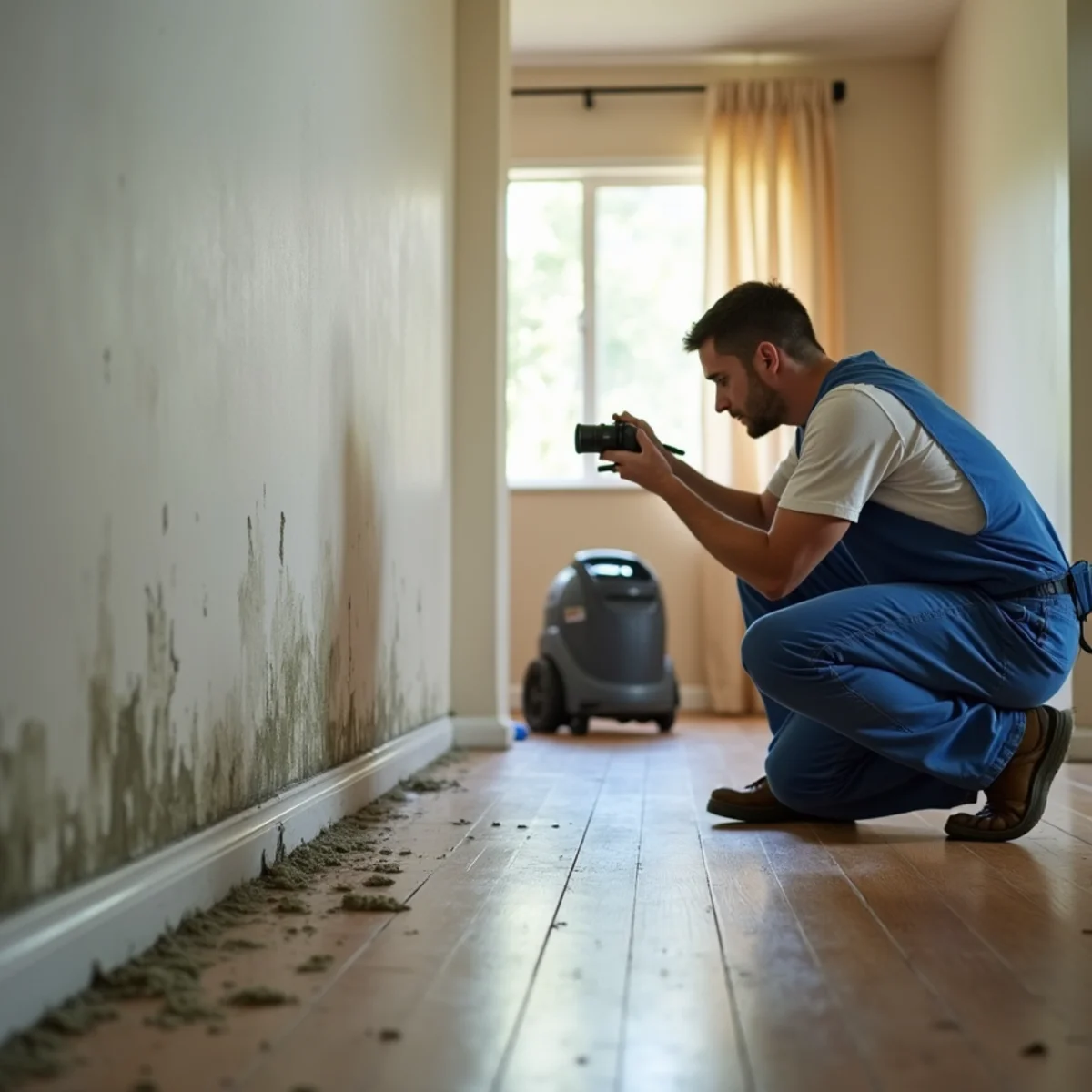
Every job starts with a visual inspection, moisture meter readings and tracing the water back to where it starts. Thermal imaging helps find cool, damp areas behind a wall, but it only points to where to measure; it does not prove there is mold. The crew checks plumbing fixtures, slab-edge walls, roof and window areas, flooring transitions, HVAC condensate paths and return vents, and tells you which findings need a plumber, roofer or HVAC technician rather than a mold crew. If you only need answers, start with a mold inspection. If a buyer, landlord or doctor wants lab results, that is mold testing.
Every reading is recorded, along with whether the source is still active, comes and goes, or has already been fixed. Visible growth, hidden moisture behind a finish, and an odor with nothing visible are written up separately, because each leads to different work. The same inspection applies to residential mold remediation and to commercial jobs in offices, restaurants and retail space along Beach Boulevard.
Containment, negative air and HEPA filtration
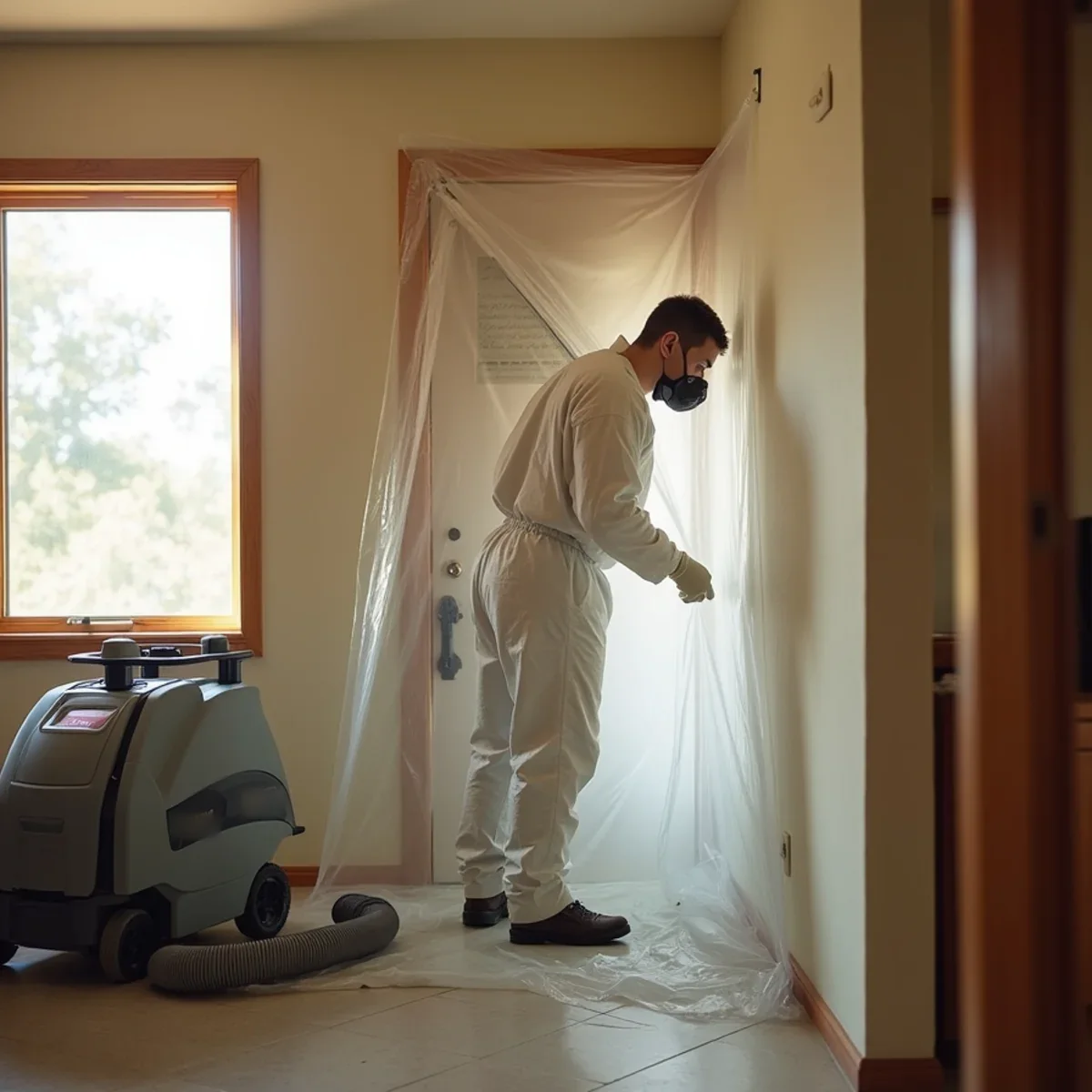
Containment turns the affected area into a sealed work zone with plastic barriers and a zippered entry. An air scrubber with a HEPA filter pulls air out of that zone so the pressure inside stays slightly lower than the rest of the house. That negative air pressure means that when a door or zipper opens, air flows into the work area and through the filter instead of carrying spores into clean rooms.
Removing or cleaning, by material
Hard, nonporous surfaces can usually be cleaned once the water is stopped. Porous materials hold growth below the surface: moldy drywall, insulation, carpet pad and ceiling tile are usually cut out and bagged rather than cleaned. Framing is cleaned or sanded when the growth is on the surface and the wood is sound. Moisture readings, the depth of the growth and access decide each call, and the written scope says why. What comes out is bagged inside containment and logged, with photos and disposal records kept for the project file. An antimicrobial product can be part of the cleaning plan, but it never replaces fixing the source, removing what needs to go, and drying. The full room-by-room process is on our mold removal page.
Drying, HVAC and rebuilding
Drying starts once the source is fixed or isolated, with air movers, dehumidifiers and repeat moisture readings logged until the materials hit dry targets. The HVAC system is evaluated when dust or spores may have reached the return side. Walls are not closed up until the cleaned area has been reviewed against the scope and the readings. Rebuilding work that alters the structure is done by a CSLB-licensed contractor.
- Correct or isolate the moisture source.
- Set the work-zone boundaries and the air-control plan.
- Remove or clean materials according to their condition and the written scope.
- Dry the structure, logging moisture readings and equipment changes.
- Review the cleaned area, the records and any verification before walls are closed.
- Rebuild drywall, flooring, ceilings, trim or framing only once the area is ready.
At the end you should be able to see what was found, what was removed, how drying went, and why rebuilding could start.
What mold remediation costs in Buena Park
Cost depends on the inspection, fixing the source, the size of the containment, what has to be removed and hauled away, drying time, HVAC work, rebuilding and whether clearance testing is needed. The ranges below are published local estimates collected for planning. They are not our prices and not a bid; your price comes in writing after someone has actually looked at the job.
| Scope | Published local range | What moves the price |
|---|---|---|
| Inspection or testing | $300 to $650 (another local estimate: $350 to $600) | Number of samples, lab fees, written report, thermal imaging |
| Small contained removal | $800 to $2,800 | Containment size, material removed, access under sinks or in closets |
| Small-area remediation | $600 to $3,000 | Porous vs hard surfaces, whether the source is already fixed |
| Multi-room or drywall removal | $3,500 to $8,500 | Linear feet of flood cuts, insulation, flooring, drying days |
| Whole-structure or commercial | $8,500 to $25,000+ (structural work may run $14,000+) | Occupied space, after-hours work, HVAC, framing |
| Clearance testing | $300 to $500 | Number of rooms and samples, independent assessor |
One Orange County estimate puts remediation at $14 to $28 per square foot. Two estimates for the same job can still be far apart because they cover different work. Compare whether each one includes source correction, containment, negative air, HEPA filtration, removal and disposal, drying equipment, moisture logs, HVAC evaluation, rebuilding, clearance and exclusions. A low number can quietly leave out rebuilding or verification. For a longer breakdown, read how much mold remediation costs in Buena Park.
Questions that make two quotes comparable:
- Is the estimate based on measured moisture and marked boundaries, or only the patch you can see?
- Are drywall, insulation, flooring, contents, disposal, equipment and rebuilding itemized?
- Are milestones and payment terms written down before you authorize work over $500?
- Is structural drying and dehumidification included?
- Is post-remediation verification included, or quoted separately?
- Which plumbing, roofing, HVAC or rebuilding work is done by another contractor?
Insurance claims and the written scope
Whether a policy pays for mold depends on the policy, the cause, exclusions and endorsements, and whether the mold followed a sudden, covered water event or a slow leak nobody caught. Many California policies exclude long-term seepage or cap mold coverage with a sublimit. Nobody can promise approval, and we will not. What we can do is document the job properly: incident timeline, photos and video before cleanup, a room-by-room list of affected materials and belongings, moisture readings, drying logs, disposal records, the remediation scope and any change orders.
Notify your insurer promptly and ask what emergency mitigation is authorized. Then keep a record of:
- The date and time the leak, storm water, odor or growth was discovered.
- Names and contact details for the insurer, adjuster, plumber, roofer, HVAC contractor and mold crew.
- Copies of inspection findings, moisture maps, equipment logs, invoices, receipts and proposed change orders.
- Whether mold, water damage, source repair, contents, temporary housing and rebuilding are covered separately.
- What the adjuster approved, declined or asked you to document.
Before you sign, the written scope should name the source (or the working assumption), the affected rooms and materials, the containment boundaries, air filtration, removal and disposal, cleaning, drying and moisture checks, HVAC decisions, rebuilding, verification or testing, exclusions, payment milestones and how change orders work. California generally requires a written contract for home-improvement work over $500, and you can check any contractor on the CSLB license lookup. Our guide on whether homeowners insurance covers mold in California walks through the claim side.
- Which moisture readings and photographs will you receive before walls are closed?
- Is final testing proposed, who performs it, what protocol applies, and how does the result affect rebuilding?
- Turn down a vague "mold treatment" line with no material, area, method or documentation behind it.
Credentials, and checking the work before rebuilding
California has no state license for mold remediation, inspection or testing, so be wary of anyone advertising a "state-certified mold remediator". What California does license is construction: work of $1,000 or more that alters the structure, like cutting out drywall or replacing flooring, needs a CSLB-licensed contractor. Every mold remediation crew we send is licensed where California requires it, and insured. Ask for the license number of whoever will do the rebuild, and look it up yourself.
Before walls are closed, the job should be checked: the source fixed or assigned to the right trade, moisture readings back to dry, cleaning and disposal documented, HVAC decisions recorded. Independent clearance testing can be added when it answers a real question. The California Department of Public Health points out that fixing moisture and removing damaged material matter more than a lab number, and that there is no official safe spore level. A test result alone does not prove a job succeeded.
Before you authorize drywall, flooring, ceiling or framing repairs, confirm that:
- The original moisture source is fixed, or assigned in writing to the trade that will fix it.
- Moisture readings and drying logs cover every affected material in the scope.
- Containment, removal, cleaning, disposal and HVAC decisions are documented.
- You know whether an independent assessor is recommended and what acceptance criteria apply.
If you want the inspection or the clearance test done by someone who has no stake in the removal, say so when you call and we will set the job up that way. Several restoration franchises also appear in Buena Park searches, including SERVPRO of Buena Park, Paul Davis Restoration of Southern California and Rainbow Restoration of Buena Park. Whoever you call, compare the license of the company doing the work, insurance, the written scope and how the job will be verified.
Why choose us
Why Buena Park calls Mold & Water Damage Pros
Answered around the clock
Nights, weekends and holidays. Mold found at 11 p.m. before an escrow deadline gets the same live answer as a Tuesday morning call.
Source first, mold second
Removing mold without stopping the water just resets the clock. Every scope names the moisture source and who is fixing it.
Price before work
The scope and price are in writing before containment goes up. Changes are written up as change orders, not surprises on the invoice.
Built for 1960s slab homes
Slab leaks, fanless bathrooms, attic sheathing and asbestos-era finishes are the everyday work here, not an edge case.
Landlords and tenants too
Nearly half of Buena Park households rent. Occupied-unit work, tenant notice and documentation for code enforcement are routine.
Straight answers on testing
Testing is recommended when it answers a real question, not as an upsell. You can ask for an independent assessor at any point.
How we are set up, in plain terms
Every mold remediation crew we send is licensed where California requires it, and insured. Buena Park Mold & Water Damage Pros connects you with independent mold remediation contractors who perform the work. We handle mold only; fire and smoke work and general water damage restoration are outside what this site does. More about how we work.
- Live answer 24/7
- Written scope and price
- Photos and moisture readings
Service areas
Mold remediation around Buena Park
Buena Park plus six cities within about 5 to 20 minutes, in Orange County and across the Los Angeles County line.
Inside Buena Park we cover every neighborhood, from the tracts off Orangethorpe Avenue and Beach Boulevard near Knott's Berry Farm and Knott's Soak City to the homes around Ralph B. Clark Regional Park and Bellehurst. Mentioning a nearby landmark on the call helps us route the right crew; it says nothing about your home's risk.
Mold remediation in La Palma, CA
Orange County · 5 to 10 minutes from Buena Park
Slab leak and bathroom mold in 1960s and 1970s tract homes, next door to Buena Park.
Mold remediation in Cypress, CA
Orange County · 10 to 15 minutes from Buena Park
Inspection, testing and removal for owner-occupied 1960s and 1970s homes.
Mold remediation in La Mirada, CA
Los Angeles County · 10 to 15 minutes from Buena Park
Slab leak mold and original-bathroom mold in 1950s tract homes.
Mold remediation in Stanton, CA
Orange County · 10 to 15 minutes from Buena Park
Documented mold remediation for apartments, rentals and mobile homes.
Mold remediation in Fullerton, CA
Orange County · 10 to 15 minutes from Buena Park
Crawl space, slab and rental mold from downtown to Sunny Hills.
Mold remediation in Anaheim, CA
Orange County · 10 to 20 minutes from Buena Park
West and central Anaheim: postwar homes, apartment corridors and Colony-district houses.
Reviews
What Buena Park customers say
Customer reviews are on the way
This site is new, and we only publish reviews from real customers, word for word, with their permission. You will not find made-up testimonials or a star rating here until genuine reviews come in. In the meantime, ask us anything on the phone and judge us by the written scope you get before work starts.
Buena Park Mold & Water Damage Pros publishes verified reviews only.
Mold guides
Answers before you call
8 min read
Found Mold After a Leak? What to Do in the First 48 Hours
Stop the water, leave the mold alone and start drying: here is what to do in the first hour, the first day and on day two after a leak in a Buena Park home.
Read the guide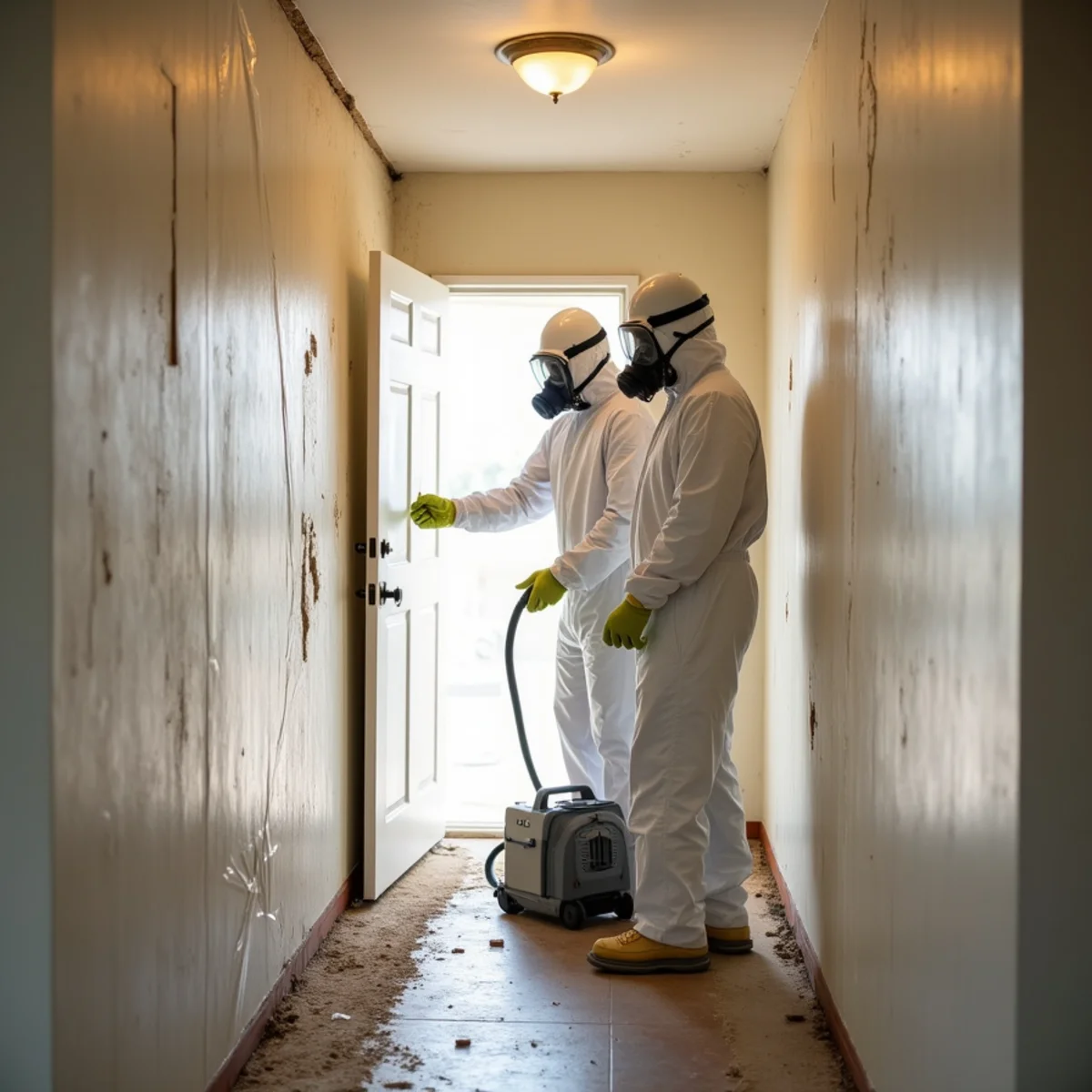
8 min read
How Much Does Mold Remediation Cost in Buena Park, CA?
Published Orange County estimates for mold inspection, removal and clearance testing, and the eight factors that decide where a Buena Park job actually lands.
Read the guide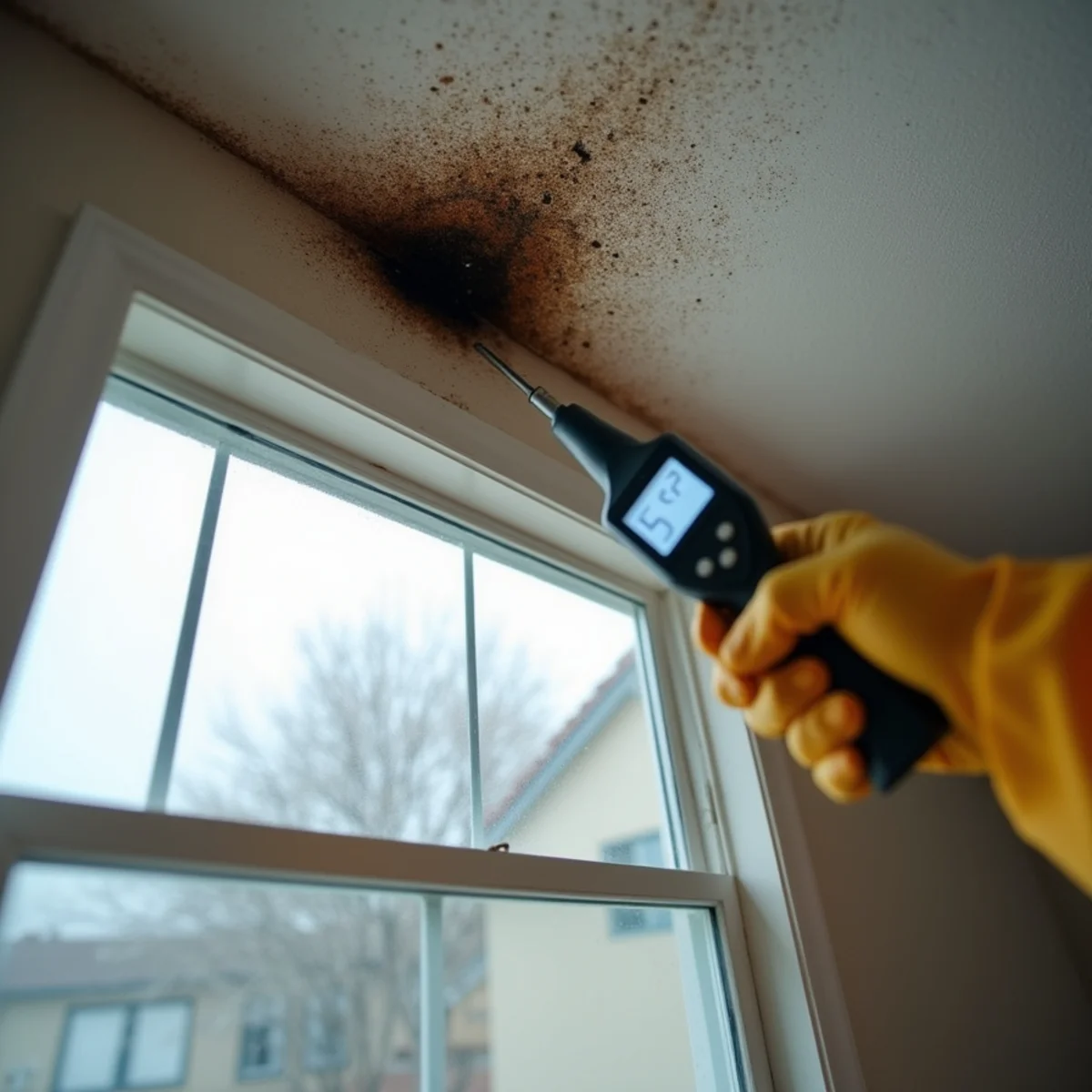
8 min read
Does Homeowners Insurance Cover Mold in California?
Most California policies exclude mold from slow leaks but may cover mold after a sudden, accidental water event, usually up to a sublimit. Here is how to tell which side of that line your claim falls on.
Read the guideCommon questions about mold remediation in Buena Park
How quickly should I call after a leak or after finding mold?
Call as soon as the area is safe, especially if drywall, insulation, flooring or belongings got wet. The EPA's target is to dry wet materials within 24 to 48 hours. That is a goal, not a guarantee that mold will not start, which is why a moisture check matters even when the surface looks dry. A live person answers (831) 303-1192 24 hours a day.
Do I need mold testing before remediation?
Usually not. A visual inspection, moisture readings and finding the source decide most of the immediate work. Testing earns its cost when there is a specific question, like hidden growth you cannot reach, an escrow or landlord dispute, or clearance after the work. The California Department of Public Health does not recommend relying on testing alone to decide whether a job succeeded. See mold testing for when it helps.
Can I clean a small patch of mold myself?
Sometimes. A small spot on a hard surface, with a known and fixed water source, can often be cleaned carefully. Do not scrub or bleach porous drywall, insulation, carpet pad or ceiling tile, because that spreads spores and hides where the water went. Call for an inspection when the source is hidden, the smell will not go away, the growth comes back, or the HVAC may be involved.
Why does mold keep coming back after I clean it?
Because the water is still there. A slab leak, a failed shower pan, AC condensation or a roof leak keeps feeding the material, and porous drywall or insulation can hold growth below the surface you wiped. Repeated surface cleaning does not fix any of that. Mold that returns needs source tracing and moisture readings, then removal of what cannot be cleaned.
Does homeowners insurance cover mold remediation in California?
It depends on the policy, the cause of the water, exclusions and endorsements. Mold that follows a sudden, covered water event may be covered, often with a sublimit, while mold from long-term seepage usually is not. Notify your insurer promptly, photograph everything before cleanup, and ask what emergency mitigation is authorized. We can document the job for your claim but cannot promise approval.
Which credentials should a Buena Park mold contractor have?
California has no state license for mold remediation, so a mold certificate is not a license. Construction work of $1,000 or more that alters the structure, like drywall or flooring removal, needs a CSLB-licensed contractor. Ask for that license number and check it on the CSLB website, along with proof of insurance and a written scope. Every mold remediation crew we send is licensed where California requires it, and insured.
How long does mold remediation take in a home?
A small contained job in one bathroom can be finished in a day or two. Jobs with drywall and insulation removal, several rooms, drying time, HVAC work or rebuilding take longer, and homes built before 1980 may need an asbestos survey under South Coast AQMD Rule 1403 before tear-out, which usually adds a day or more. The written scope includes a realistic timeline.
What does a mold inspection cost in Buena Park?
Published local planning ranges put an inspection or test at about $300 to $650, and another local estimate gives $350 to $600. Those are third-party figures, not our prices or a quote. Ask whether source tracing, moisture mapping, lab samples and a written report are included or billed separately; you get the price in writing before the visit. See mold inspection for what the visit covers.
What does mold remediation cost in Buena Park?
Published planning ranges run from about $600 to $3,000 for a small area, $800 to $2,800 for a small contained removal, $3,500 to $8,500 for multi-room or drywall removal, and $8,500 to $25,000 or more for whole-structure or commercial work. The written scope matters more than any range: containment size, what is removed, drying, an asbestos survey in older homes and rebuilding all move the number.
Should I turn off my HVAC system if I find mold?
If the affected area is near a return vent and the system could pull spores and dust through the house, turning it off while the area is assessed is usually sensible, as long as that does not create another problem such as overheating in a heat wave. Ask which equipment, coils, drain pans, registers or ductwork need a professional look. Duct cleaning should follow what the inspection finds, not be added by default.
What should be in a mold remediation contract?
The moisture source or working assumption, affected rooms and materials, containment and air filtration, removal and disposal, cleaning, drying and the moisture-reading schedule, HVAC decisions, rebuilding, verification or testing, exclusions, payment milestones and how change orders work. California generally requires a written contract for home-improvement work over $500, and structural work of $1,000 or more must be done by a CSLB-licensed contractor.
Do I need clearance testing before rebuilding?
Not always. Ask what verification fits the documented scope: a visual review, moisture readings back to dry, cleaning records and photographs, and independent testing when it answers a real question. The California Department of Public Health notes that testing alone does not determine success, so the decision should also cover source repair, drying, containment and removal.
How does a mold remediation company find hidden moisture?
With a visual inspection, moisture meter readings and source tracing, plus thermal imaging where it helps. The crew checks drywall, insulation, flooring, framing, plumbing runs, roof and window areas, HVAC components and return vents. A moisture reading shows what a visual check cannot, such as wet drywall behind a dry-looking finish; a thermal image only points to where to measure.
Do you serve cities outside Buena Park?
Yes. Crews cover La Palma, Cypress, Stanton, Fullerton and west and central Anaheim in Orange County, and La Mirada across the Los Angeles County line, all within about 5 to 20 minutes of Buena Park. See all mold remediation service areas for details on each city.
Contact
Request Buena Park mold help now
A wet wall, a smell that keeps spreading or growth you can see should not wait on an email. The first call covers the source, the rooms involved, safety, the HVAC and any insurance timing. The next step is an inspection, not unnecessary demolition.
You do not need to diagnose the mold yourself. We will help document the condition, find the moisture source, explain the containment and drying decisions, and put the next scope in writing.
Buena Park Mold & Water Damage Pros
Serving Buena Park, CA 90620 and nearby areas
Open 24 hours, 7 days a week
Request form
Not urgent? Send a request
Use this for jobs that can wait for a callback, like an escrow inspection, a rental turnover or a musty smell you want checked this week.
For the fastest help, call (831) 303-1192.
Active leak, spreading growth or a deadline today? Calling is faster than any form.
Call (831) 303-1192Thanks. Request received.
We will call you back at the number you gave us. If anything changes or it becomes urgent, call (831) 303-1192 any time, day or night.