If a slab leak, roof leak or burst supply line has soaked part of your Buena Park home, call (831) 303-1192 now, because mold can start on wet drywall, carpet pad and baseboards within 24 to 48 hours. A live person answers around the clock and sends the nearest available mold remediation crew to map the moisture and keep mold from taking hold.
This page is about the mold that follows water, not the leak itself. Your plumber or roofer fixes the pipe or the roof. Buena Park Mold & Water Damage Pros connects you with independent mold remediation contractors who dry what can be saved, cut out what cannot and record the job with photos and moisture readings. The scope and price come in writing before work starts.
Reviewed by the Buena Park Mold & Water Damage Pros team · Updated · Process references: IICRC S520 (2024), CDPH mold guidance, CSLB contractor rules
The short answer
After a leak in Buena Park, mold can begin on wet drywall, carpet pad and wood within 24 to 48 hours. Get the leak fixed first, then have the area moisture-mapped. Materials that dry quickly with no growth can stay; soaked or moldy drywall, insulation and pad are cut out under containment and the wall cavity is dried.
How fast mold starts after a leak: the 24 to 48 hour window
EPA guidance is to dry wet building materials within 24 to 48 hours. That is a target, not a guarantee. Spores are already present in every home, and once drywall paper, carpet pad or the bottom of a door jamb stays wet, growth can begin inside that window. Warm weather speeds it up.
The wettest material is usually out of sight. Water runs down inside a wall, spreads across the slab under laminate or carpet, and soaks the bottom plate before any stain shows. By the time the room smells musty, the window has often closed.
Safety in the first 30 minutes
Do not wade across wet carpet to reach an outlet or a power strip. Shut a circuit off at the panel only if the panel and the floor in front of it are dry; otherwise wait for an electrician.
- A ceiling that sags or bulges under a bathroom, water heater closet or attic leak is holding water. Keep everyone out from under it.
- Water from a toilet overflow, a backed-up drain or storm runoff is contaminated. Wear gloves, keep kids and pets away, and expect soaked porous materials to be discarded rather than dried.
- Photograph before you move or clean anything: the wet area from the doorway, the water line on the drywall, the failed hose or valve, and the water meter. Keep the failed part for the adjuster.
Slab leaks under Buena Park ranch homes: mold at baseboards and under flooring
Buena Park's median home was built in 1965, and much of the city is single-story ranch tracts on a concrete slab with copper lines running under it. Orange County's water is very hard, about 15 grains per gallon, and after fifty or sixty years the pipe walls pit until a pinhole opens.
A slab leak rarely floods a room. It seeps, sometimes for months. Common signs:
- A warm spot on the floor from a leaking hot-water line
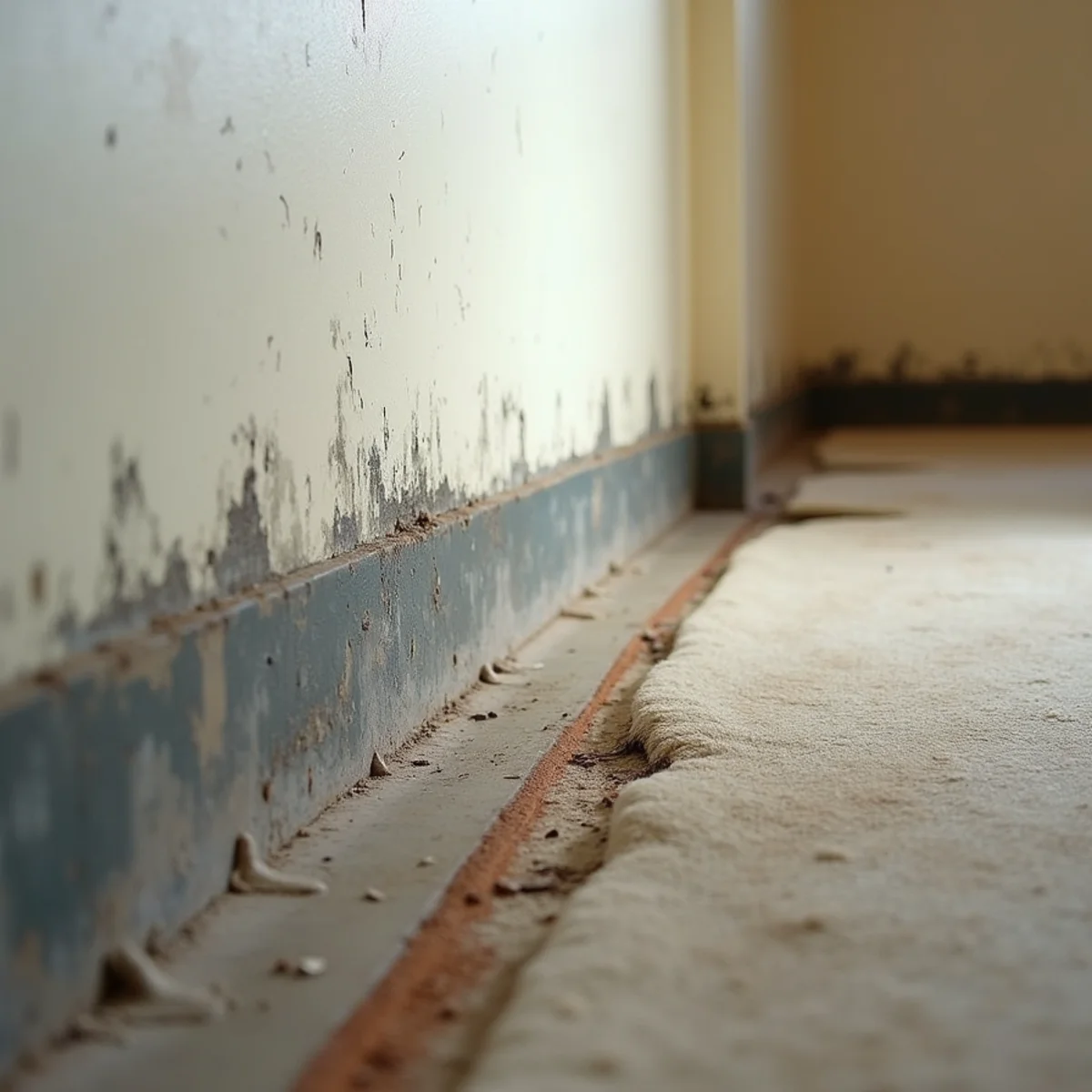
- Baseboards that swell, pull away or darken along the bottom edge
- Laminate that cups, or carpet that feels damp with nothing spilled
- A water meter that keeps moving with every fixture off
- A musty smell strongest near the floor
The mold usually sits in the carpet pad and tack strip, under vinyl plank and in the bottom few inches of drywall. The pipe itself is a leak-detection plumber's job, either a spot repair or a reroute through the attic. See our article on slab leaks and mold in North Orange County's older homes.
Tracing the wet zone around a stain
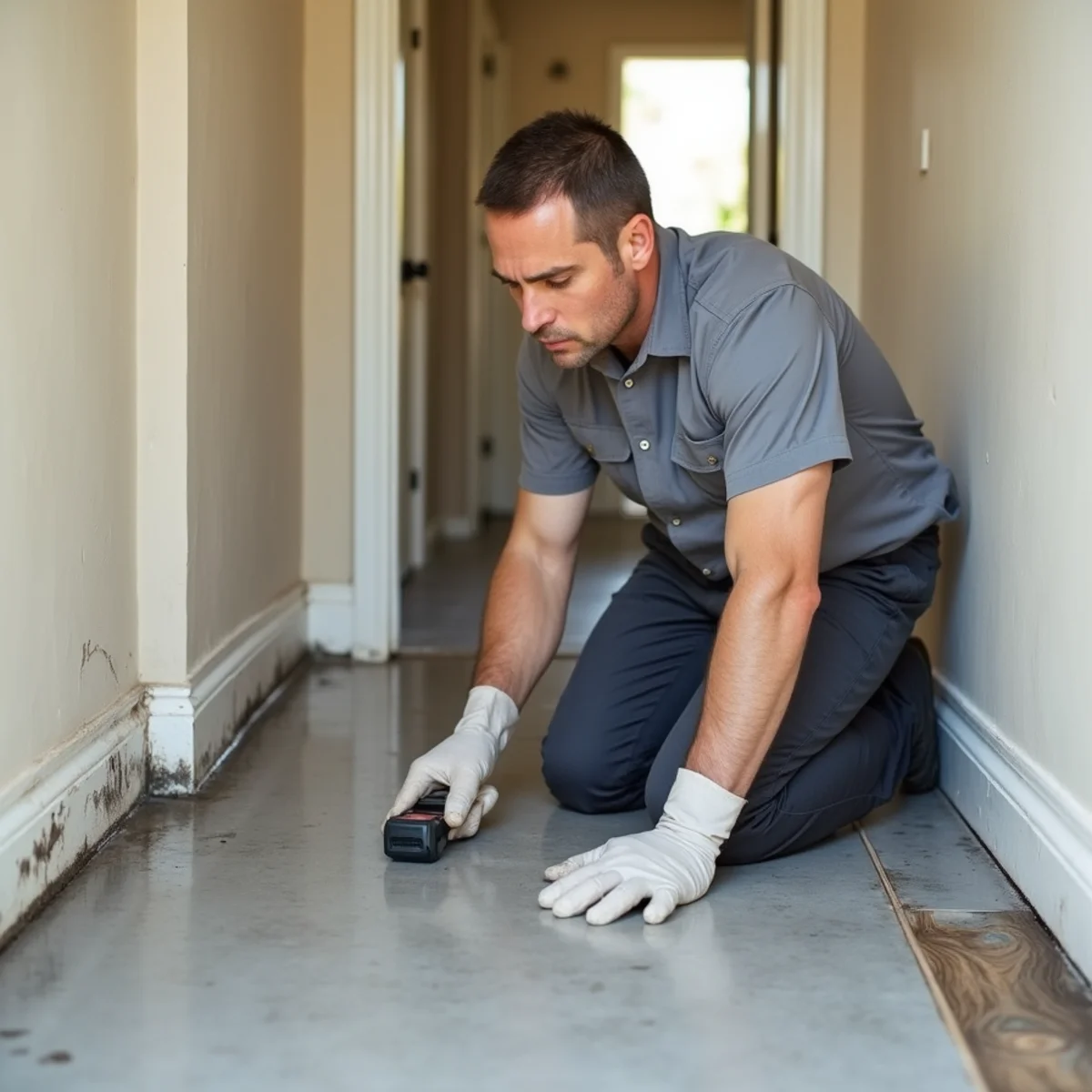
A dark baseboard marks where water surfaced, not where it stops. Readings are taken beside the stain in both directions along the wall, above it to find how high the drywall wicked, and below it at the tack strip and slab. Under a slab leak the wet area often crosses a shared bottom plate into a closet or the next room, so the other side of the wall gets checked too.
Roof and window leaks after winter storms
Buena Park is dry most of the year, so roof problems stay hidden until the rain comes in a few big bursts. The atmospheric-river storms of January 2023 and February 2024 hit roofs that had not been tested in years. Worn shingles and cracked flashing let water into the attic, where it soaks insulation and reaches the ceiling drywall.
Older aluminum windows fail differently. Wind-driven rain gets past dried-out seals and runs down inside the wall under the sill, where it stays long after the storm ends.
Homes near the Coyote Creek channel, where First Street places much of the city's 30-year flood risk, can also take water at the slab edge. After any storm leak, have a roofer or window contractor close the opening, then get a mold inspection with moisture readings before the ceiling or wall is patched.
February is usually the wettest month here, averaging about 3.1 inches of rain, and city climate documents flag flood-sensitive areas around Beach Boulevard and Fullerton Creek. Treat that as context, not a forecast for your street. Storm water that comes in under a door or at the slab edge soaks the bottom plate and tack strip from the outside in, and it is not clean water. Once the entry point is sealed, porous materials it reached are usually removed rather than dried.
Appliance and supply-line leaks: dishwashers, water heaters, washing machines
Appliance leaks are often sudden, which matters for insurance, but many drip for weeks first:
- Dishwashers: a loose drain hose or worn door gasket soaks the subfloor and cabinet base behind the toe kick.
- Water heaters: in a garage corner or hall closet, a leaking tank or relief-valve line wets the closet drywall and the bedroom wall behind it.
- Washing machines: old rubber fill hoses burst without warning, and garage laundry water can run under the wall into the family room.
- Refrigerator ice-maker lines: thin tubing behind the fridge can drip for months, and the first sign is often cupped flooring at the kitchen edge.
Swap rubber washer hoses for braided lines, and call (831) 303-1192 if you find a wet cabinet base with a musty smell.
Drying first: moisture mapping, dehumidifiers and what must be cut out
Drying here is part of mold prevention and remediation, not a separate water cleanup service. Once the plumber or roofer has stopped the water, the crew:
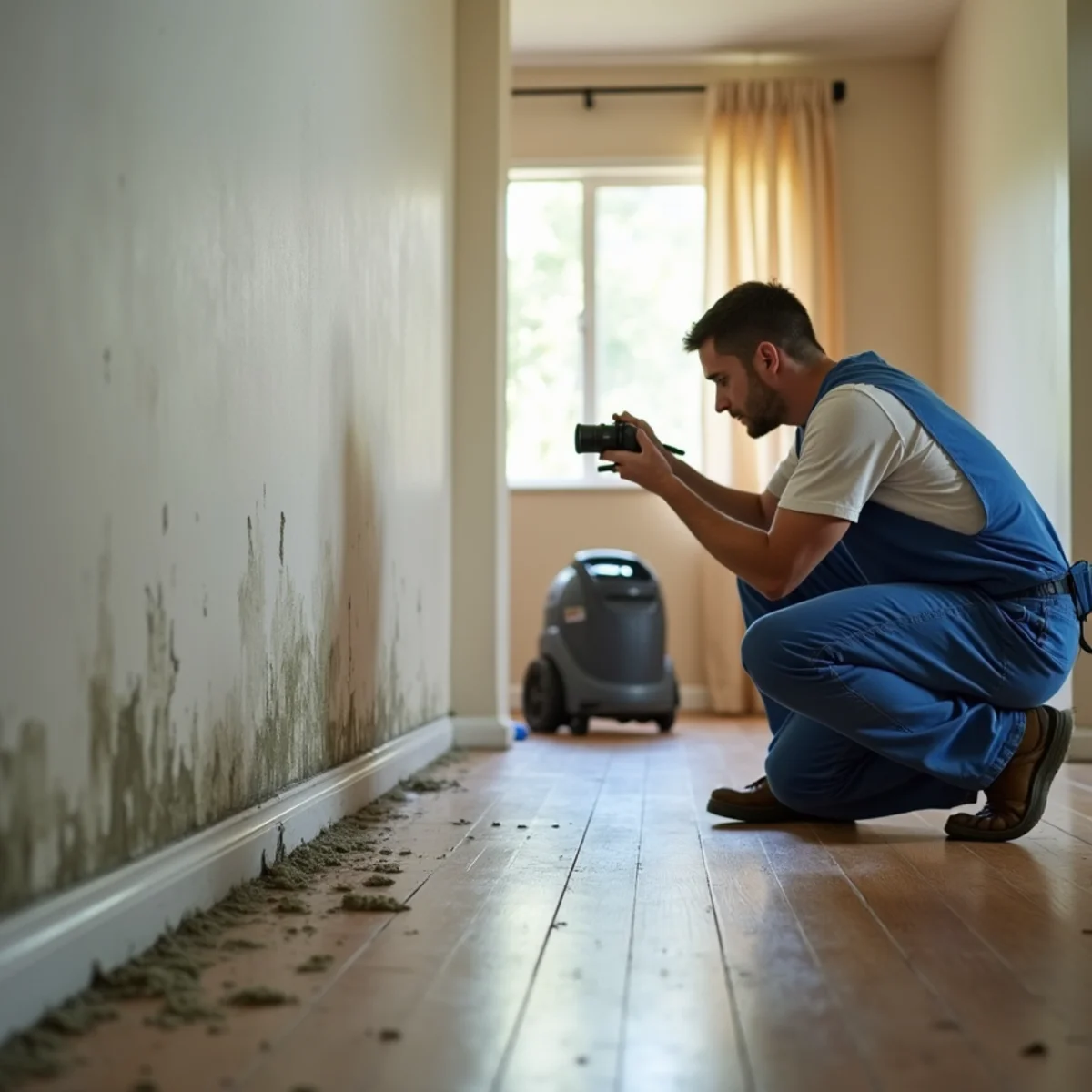
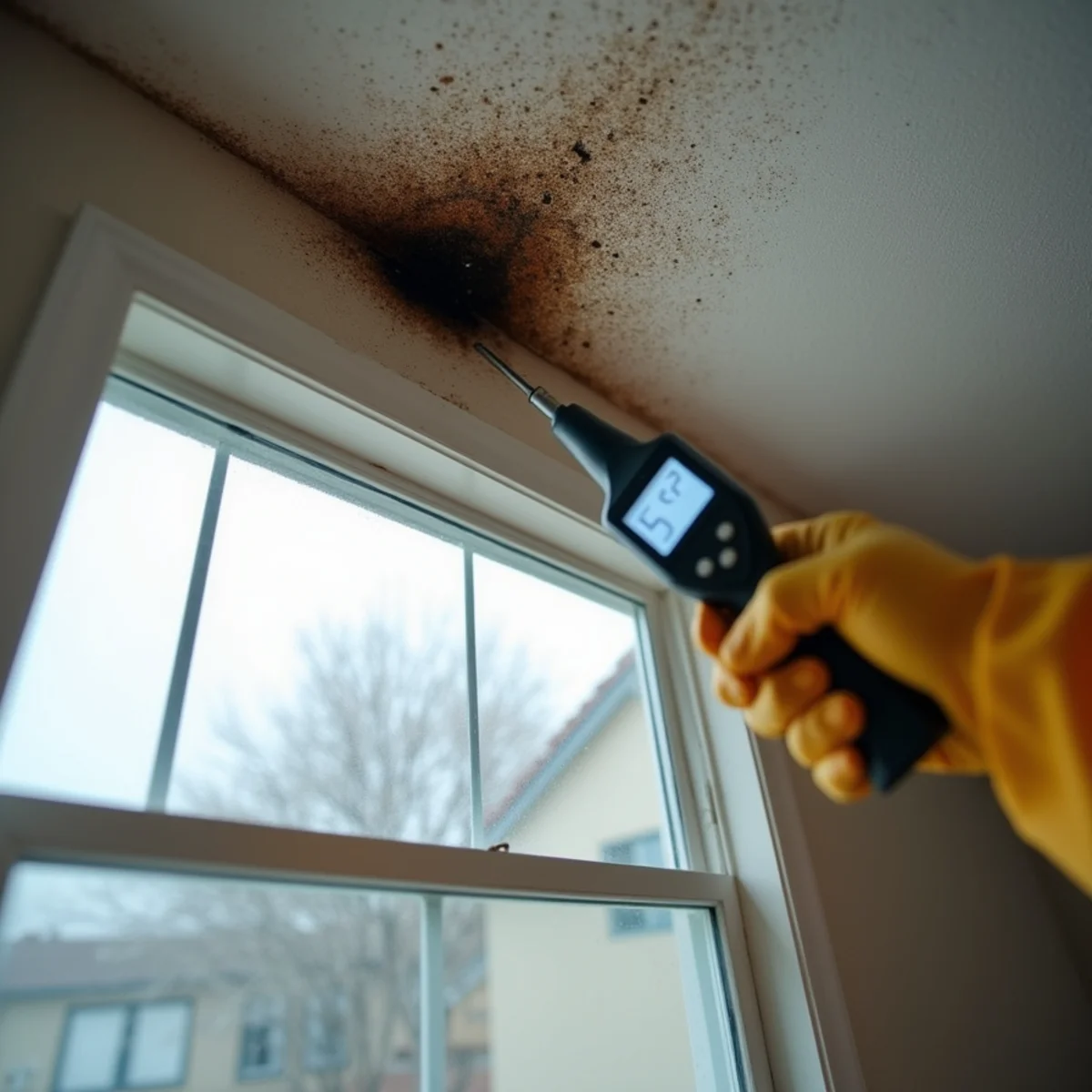
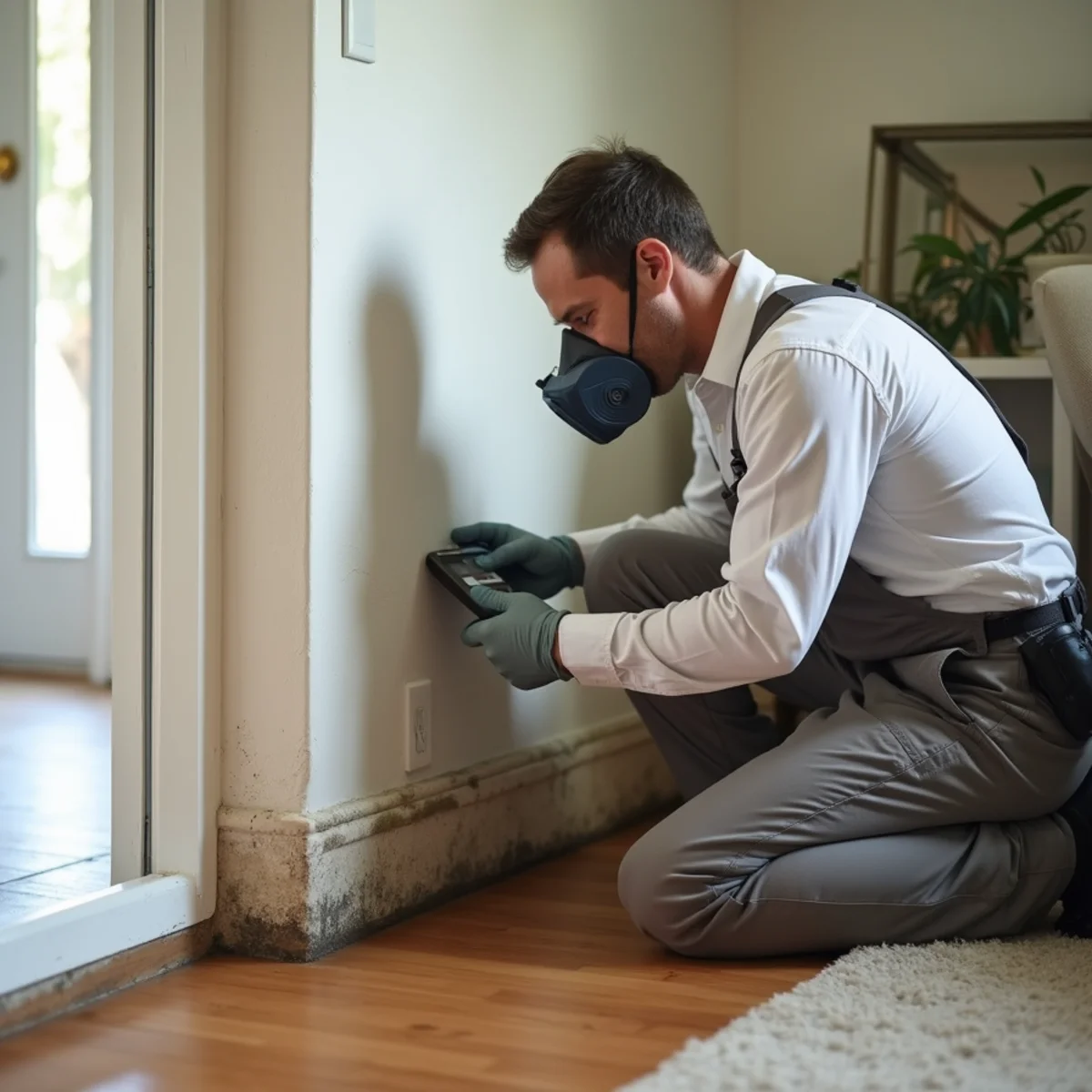
- Maps the moisture. Pin and pinless meters, often with a thermal camera, trace how far water traveled through drywall, cabinets and flooring. Readings are marked and photographed.
- Removes what traps water. Wet carpet pad, soaked insulation and swollen baseboard come out so the wall and slab can dry.
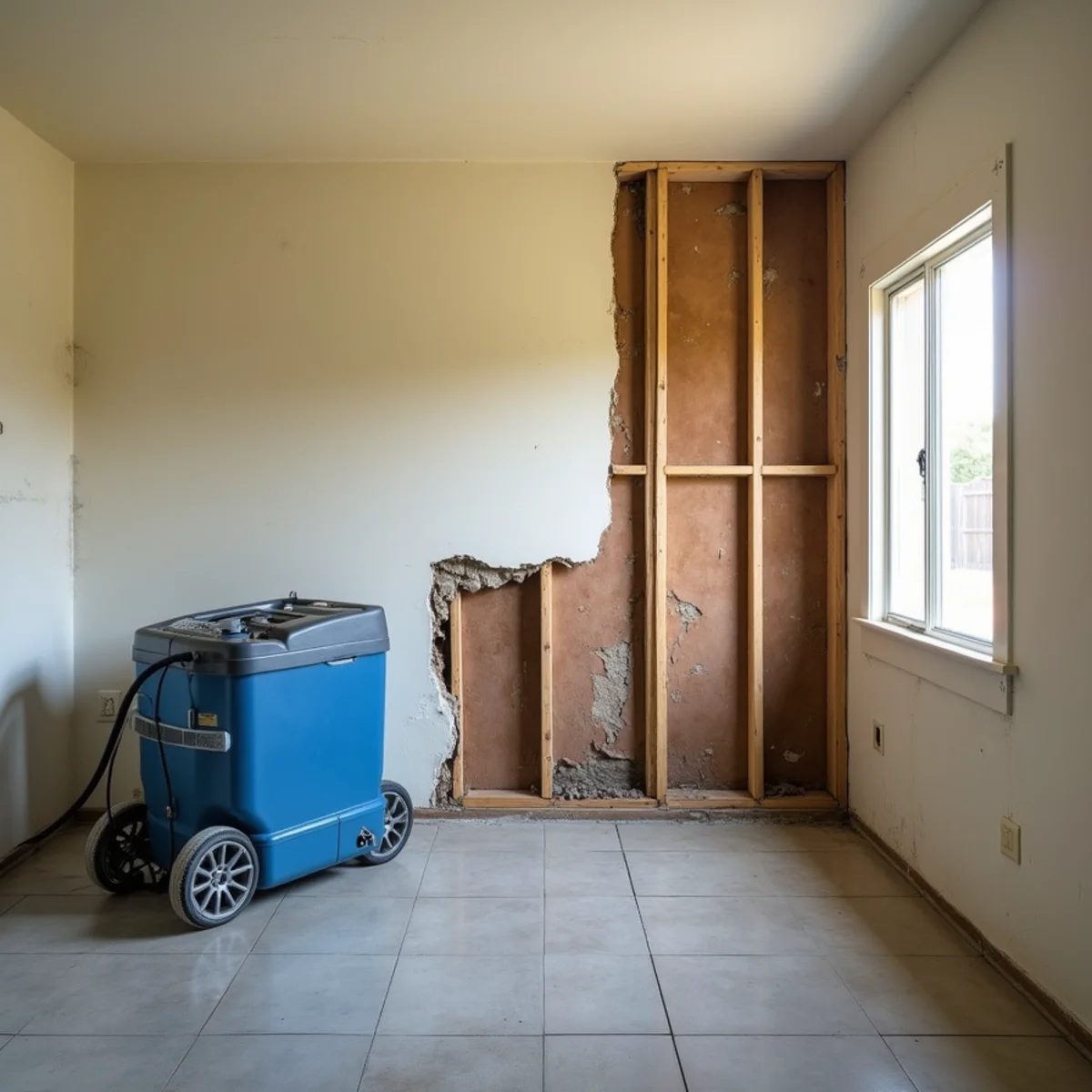
- Makes flood cuts. Drywall that wicked water is cut in a straight line above the highest wet reading, opening the cavity to the studs and bottom plate.
- Runs drying equipment. Dehumidifiers and air movers work inside the area, with HEPA filtration where mold is already present.
- Confirms it is dry. Readings are repeated until materials match an unaffected room. Only then should the wall be closed.
Drying logs: what to see before the wall closes
“It feels dry” is not a reading. Ask for the drying log, a dated record of every marked spot from the first visit to the last. It should show:
- A reference reading from the same material in an unaffected room
- Dated readings at each marked spot until they match that reference
- Which equipment ran, where, and for how many days
- Photos of the open cavity and the flood-cut line before new drywall goes up
- The plumber's or roofer's note that the source is fixed
In homes built before 1980, joint compound and popcorn ceilings can contain asbestos. South Coast AQMD Rule 1403 requires a survey before those materials are disturbed, apart from an exception for under 100 square feet of intact material in a single-family home. A survey can add a day or more; abatement goes to a separately certified contractor.
When drying is not enough: removing mold-damaged materials
Drying stops new growth. It does not remove mold that has already grown. If the leak ran for more than a couple of days, some materials are past saving:
- Drywall with growth on either face, or peeling paper
- Wet insulation, which holds water long after the wall feels dry
- Carpet pad soaked by a slab leak
- Swollen particleboard cabinet bases and laminate
- Anything soaked by sewage or floodwater
These come out under containment and negative air, following the removal approach described in IICRC S520, while studs and slab are HEPA vacuumed and cleaned. The process matches our mold removal service in Buena Park, and heavy dark growth gets the extra precautions on our black mold removal page. Every mold remediation crew we send is licensed where California requires it, and insured.
Crews work from the tract homes along Orangethorpe Avenue to the apartment blocks off Beach Boulevard, and across the surrounding mold service area, including La Palma, Cypress and La Mirada, where housing of the same era shows the same slab-leak pattern.
Insurance: sudden leaks vs long-term seepage, and mold sublimits
Most California homeowners policies separate water that arrives suddenly from water that leaks for a long time. A burst washer hose or failed water heater is usually sudden and accidental, and mold that follows it may be covered. A drip that ran for months, or a roof that leaked every winter, is often called long-term seepage or neglect and excluded.
Even covered mold is often capped by a mold sublimit far below the dwelling limit. Read your own policy or ask your agent for the figure. Nobody can promise a claim will be paid; the insurer decides. What helps:
- Photos and video of the damage before anything is moved
- The plumber's or roofer's invoice naming the cause
- Moisture readings and a written scope from the mold crew
Build the claim file around dates
The sudden-versus-seepage question often turns on timing. Write down when you first saw water or smelled mustiness, when the water was shut off, when the plumber or roofer came, and when drying started. Then add:
- The failed part itself, such as the burst hose or corroded fitting, kept in a bag
- The drying log and the list of materials removed
- A dated note of what the adjuster approved, declined or asked you to send, with the adjuster's name
Report the loss promptly. Our guide to whether homeowners insurance covers mold in California goes further into exclusions. This is general information, not legal or insurance advice.
Mold After a Leak: common questions from Buena Park
How soon after a leak does mold start growing?
Mold can start on wet drywall, carpet pad and wood within 24 to 48 hours, which is why EPA guidance aims to dry materials in that window. It is a target, not a promise, and water trapped inside a wall or under flooring can grow mold while the surface looks dry. The sooner the leak is stopped and the area moisture-mapped, the more material can be saved instead of cut out.
The leak was fixed weeks ago. Why does it still smell musty?
Fixing the pipe stops new water, but it does not dry what already got wet. A wall cavity, the carpet pad or the slab under flooring can stay damp for weeks behind closed drywall, and that is usually where a musty smell comes from. It often means mold is growing out of sight. A moisture check will show whether materials are still wet and whether anything needs to be opened up and removed.
Will my insurance pay for mold caused by a leak?
It depends on your policy and the cause. Mold that follows a sudden, accidental leak, such as a burst supply line, may be covered, often only up to a mold sublimit. Mold from a slow leak or long-term seepage is commonly excluded. Nobody can promise coverage. Photograph the damage, keep the plumber's invoice and the moisture readings, report the loss promptly and read the mold section of your policy.
Can wet drywall be dried or does it have to be replaced?
Drywall wet from a clean water source, dried within a day or two and showing no growth, swelling or peeling paper can often stay once meter readings are back to normal. Drywall that stayed wet longer, wicked water from a slab leak, has mold on either side or was soaked by dirty water should be cut out. The insulation behind it is almost always replaced. Moisture readings, not the look of the surface, decide.
Where does mold usually show up after a leak or storm in Buena Park?
Where water collects and nobody looks. After a slab leak, it is the carpet pad, the tack strip and the bottom few inches of drywall. After a roof leak, it is the attic insulation and the top side of the ceiling drywall. Window leaks feed the wall cavity under the sill, appliance leaks soak the cabinet base behind the toe kick, and storm water at a door or slab edge wets the bottom plate along exterior walls.
Can the wall be closed as soon as the plumber fixes the leak?
No. The repair stops new water, but the studs, bottom plate and slab behind the wall can stay wet for days, and closing it seals that moisture in with any mold that has started. Leave the wall open until readings on the framing match a dry reference wall, any growth has been removed and cleaned, and you have dated photos of the open cavity. If growth is found, the mold removal scope comes in writing first.
Mold After a Leak beyond Buena Park
The same crews cover the cities around Buena Park, 5 to 20 minutes out by I-5, SR-91 and Beach Boulevard. See how mold after a leak works in the housing stock of each city, or view all mold remediation service areas.