Mold removal is physical work: sealing off the room, cutting out what cannot be saved, cleaning what can, and drying the structure before anything is rebuilt. In Buena Park that usually means a single-story, slab-on-grade ranch house built around 1965, with growth behind a baseboard, under a floating floor or inside a bathroom wall that stayed wet too long.
This page walks through the job room by room so you know what a crew will do and why. Buena Park Mold & Water Damage Pros connects you with independent, insured mold crews working across Buena Park and nearby cities. Call (831) 303-1192 at any hour, talk to a person, and get a written scope and price before any work starts.
Reviewed by the Buena Park Mold & Water Damage Pros team · Updated · Process references: IICRC S520 (2024), CDPH mold guidance, CSLB contractor rules
The short answer
Mold removal in Buena Park means sealing the affected area with plastic containment, running HEPA air filtration under negative pressure, cutting out porous materials like wet drywall and insulation, HEPA-vacuuming and wiping what stays, and drying the framing. The leak that fed the mold has to be found and fixed, or the growth comes back.
Where mold grows in Buena Park homes: bathrooms, slab-edge walls, under flooring, attics
Most mold calls in Buena Park come from the same few places, because most of the housing was built the same way: stucco ranch homes on concrete slabs, with copper supply lines running under the floor.
Bathrooms
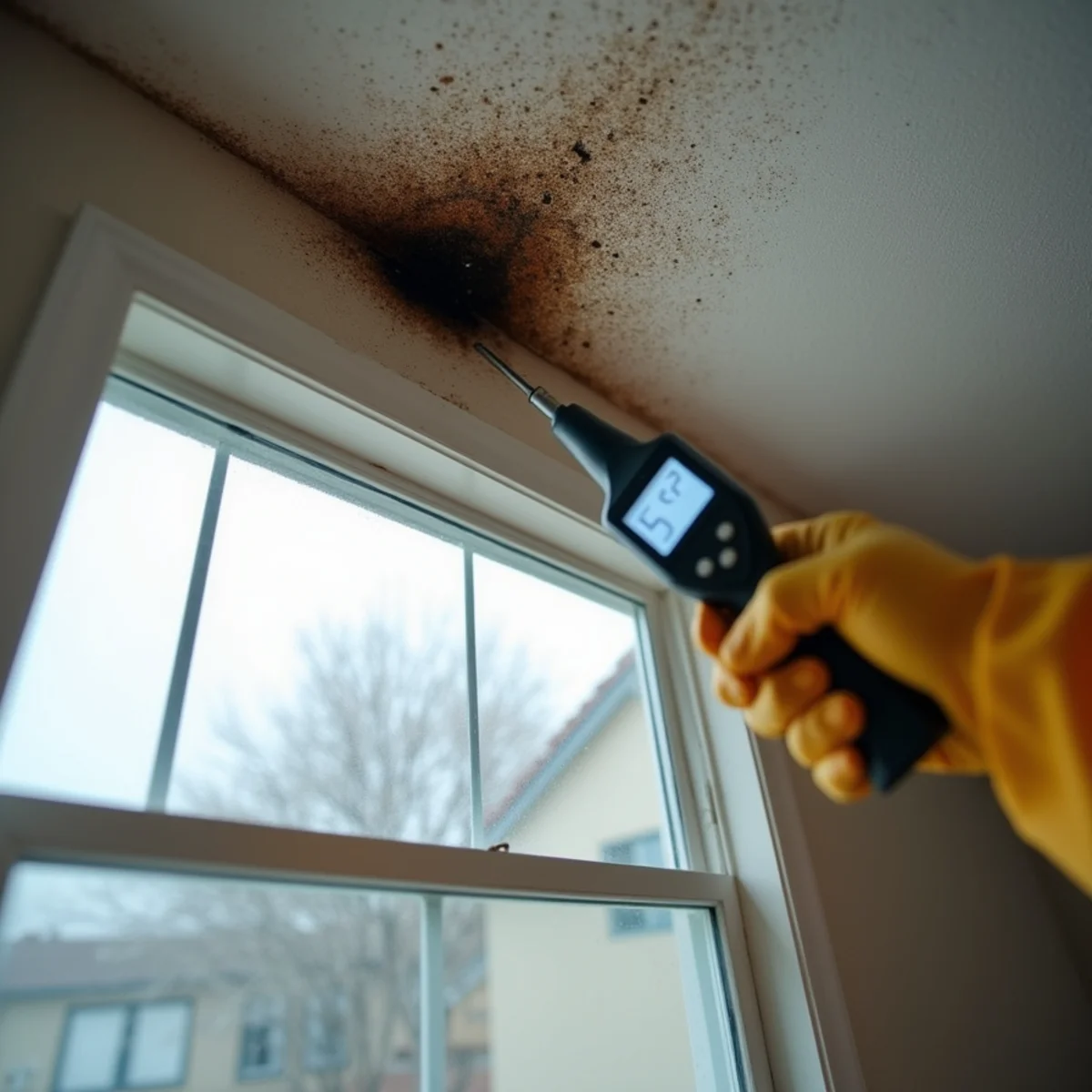
Many original hall bathrooms still have the first tiled shower pan, which cracks after decades and soaks the bottom of the wall. Plenty never had an exhaust fan, so shower steam condenses on the ceiling every day. Growth shows as a dark band along the ceiling line or behind the vanity. Dark growth that keeps returning behind a shower is covered on our black mold removal page.
Slab-edge walls
Orange County water is hard, around 15 grains per gallon, and over the years it wears pinholes in copper pipe. When a line under the slab leaks, water wicks into the bottom few inches of drywall and baseboard. The first sign is often a musty hallway or paint bubbling low on a wall.
Under flooring
Carpet pad, laminate and the foam under floating vinyl plank hold moisture against the slab, and mold can grow underneath for months with nothing showing on top. If a slab leak was repaired but the flooring was never lifted, check underneath.
Attics
Roof leaks arrive in bursts here, after storms like the atmospheric rivers of January 2023 and February 2024, and soak insulation long before a ceiling stain appears. If you smell mold but cannot find it, book a mold inspection in Buena Park before anyone opens walls on a guess.
How mold removal works: containment, negative air, HEPA filtration, removal, cleaning
The work follows the containment and removal approach described in IICRC S520, the industry standard. The goal is to take mold out without spreading spores and dust into rooms that were clean when the crew arrived.
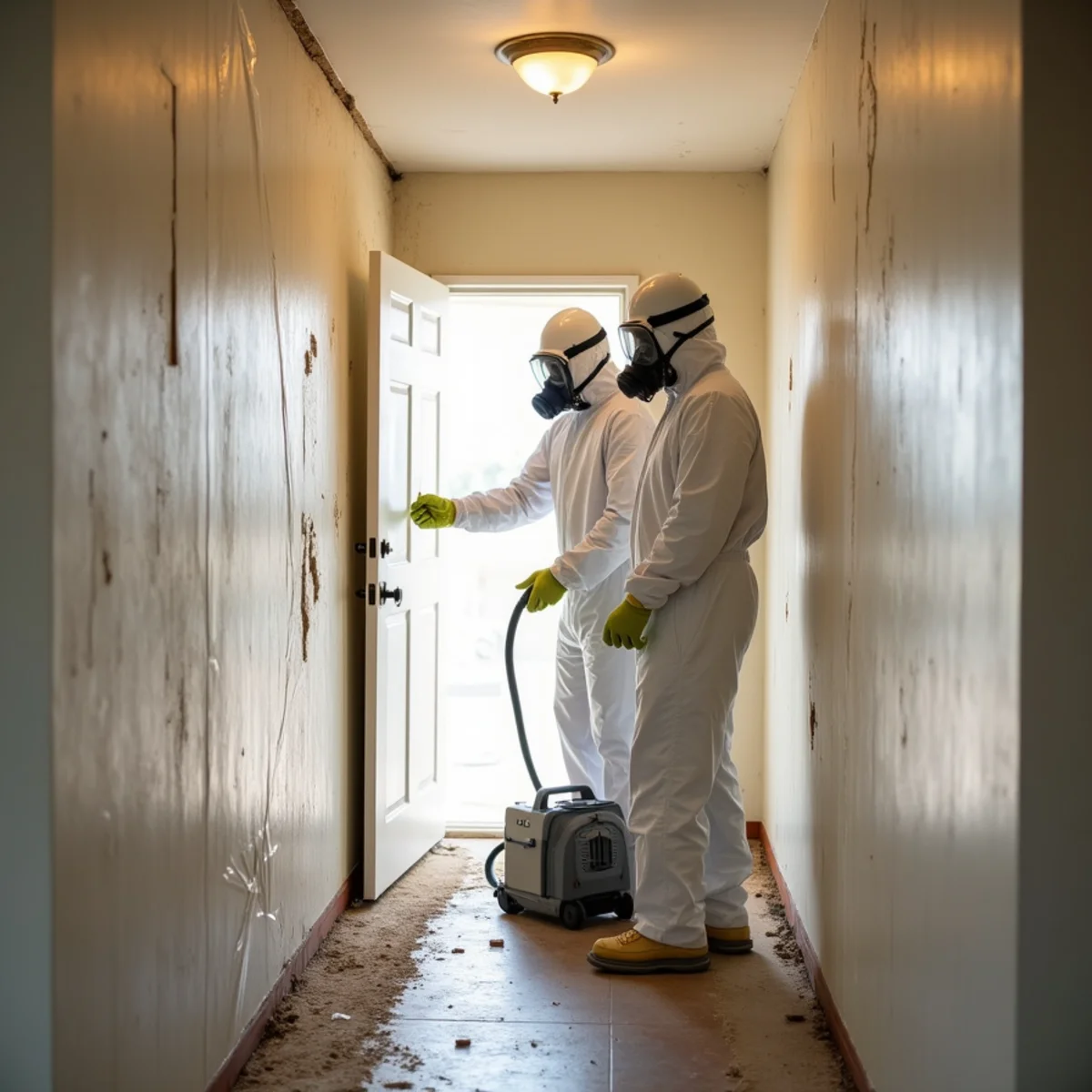
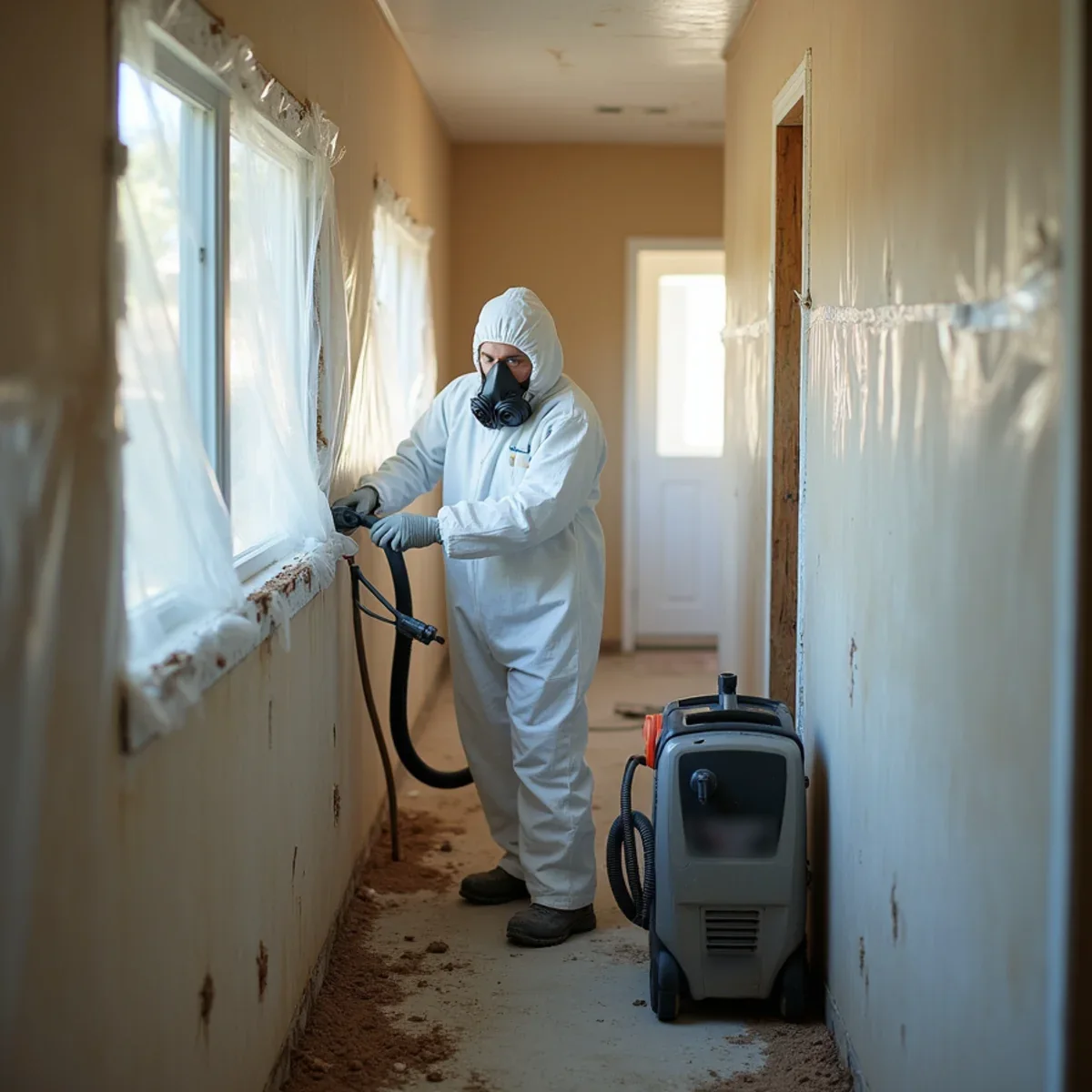
- Contain. The crew builds a plastic enclosure around the work area with a zipper door. For a bathroom that may be the doorway; for a slab-edge wall, a sealed tent along one side of a bedroom.
- Negative air. A HEPA air scrubber exhausts air out of the enclosure, often through a window, so air flows in when the zipper opens, not out.
- Remove. Moldy porous materials are cut out, bagged inside the enclosure and carried out sealed. Drywall is cut past the last wet reading, not at the edge of the stain.
- Clean. Framing, slab and hard surfaces are HEPA-vacuumed and damp-wiped. Wood with surface growth is cleaned or sanded back to sound material.
- Dry and check. Dehumidifiers run until the framing reads dry, then the crew does a final HEPA pass and visual check before the plastic comes down.
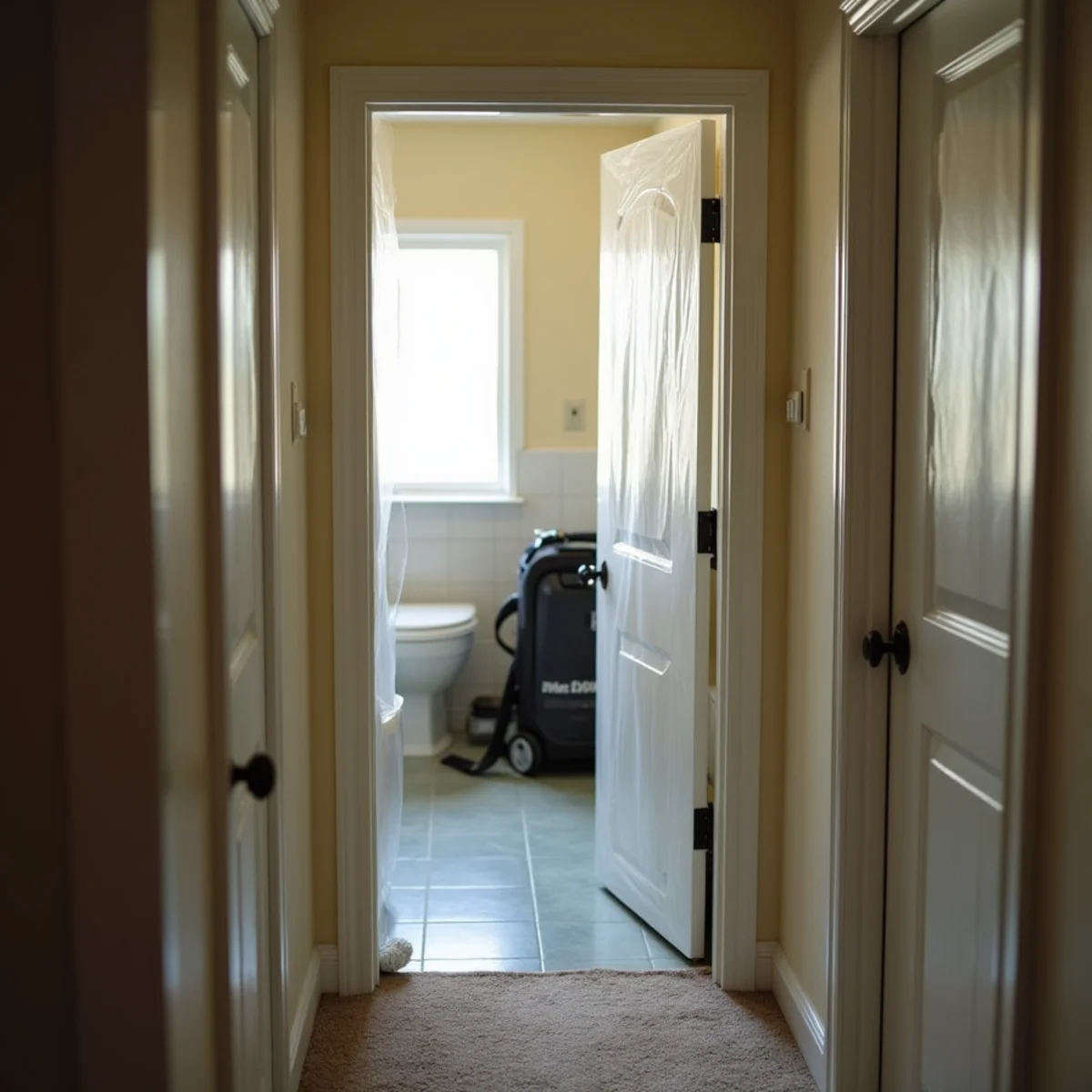
Spraying a product over the mold and leaving is not removal. Antimicrobials have a place after cleaning, but they do not replace taking the growth out.
Photos and disposal records from the job
Once the wall is closed, nobody can see how far the growth went. Ask the crew to photograph the room before containment goes up, the open cavity after drywall and insulation removal, the source if it is exposed, and the cleaned framing. The disposal record should note what was bagged and carried out, from which room and roughly how much. A buyer, an insurer or the next contractor can then see the mold was taken out, not covered up.
What gets removed and what gets cleaned: drywall, carpet, framing, contents
Porous materials that grew mold usually go; hard, non-porous materials usually get cleaned. How long the material stayed wet decides the borderline cases.
| Material | Usually removed when | Usually cleaned when |
|---|---|---|
| Drywall | Growth on the face or inside the cavity, or the board is soft from a leak | Light surface spotting on painted drywall that reads dry |
| Insulation | Almost always, once wet or moldy | Not practical to clean |
| Carpet and pad | Pad almost always; carpet when growth reaches the backing | Carpet that dried quickly when only the pad got wet |
| Framing and sheathing | Only when soft, rotted or structurally damaged | Most of the time, by HEPA-vacuuming, wiping or sanding |
| Hard surfaces (tile, metal, glass, slab) | Rarely, unless a cracked shower pan must go to stop the leak | Almost always |
| Contents | Upholstered or particleboard pieces with growth; wet paper | Solid furniture, dishes, washable clothing |
The written scope should list what comes out and roughly how many square feet, so quotes compare fairly. Rebuilding is a separate step, and structural work generally needs a CSLB-licensed contractor; check any license on the CSLB online lookup.
Porous vs nonporous: how the borderline calls are made
- The back of the board counts. Drywall with growth on the cavity side comes out, even when the painted face looks clean.
- Wet insulation is not dried and reused. It is bagged and replaced once the cavity is clean and dry.
- No tear-out on a guess. Until readings and a look inside the wall show what is behind the finish, nobody should promise how much comes out.
- Anything that stays gets a reason. If a borderline material is cleaned instead of removed, the scope should say it read dry and why it was kept.
Attic, crawl space and HVAC mold
Attic mold removal
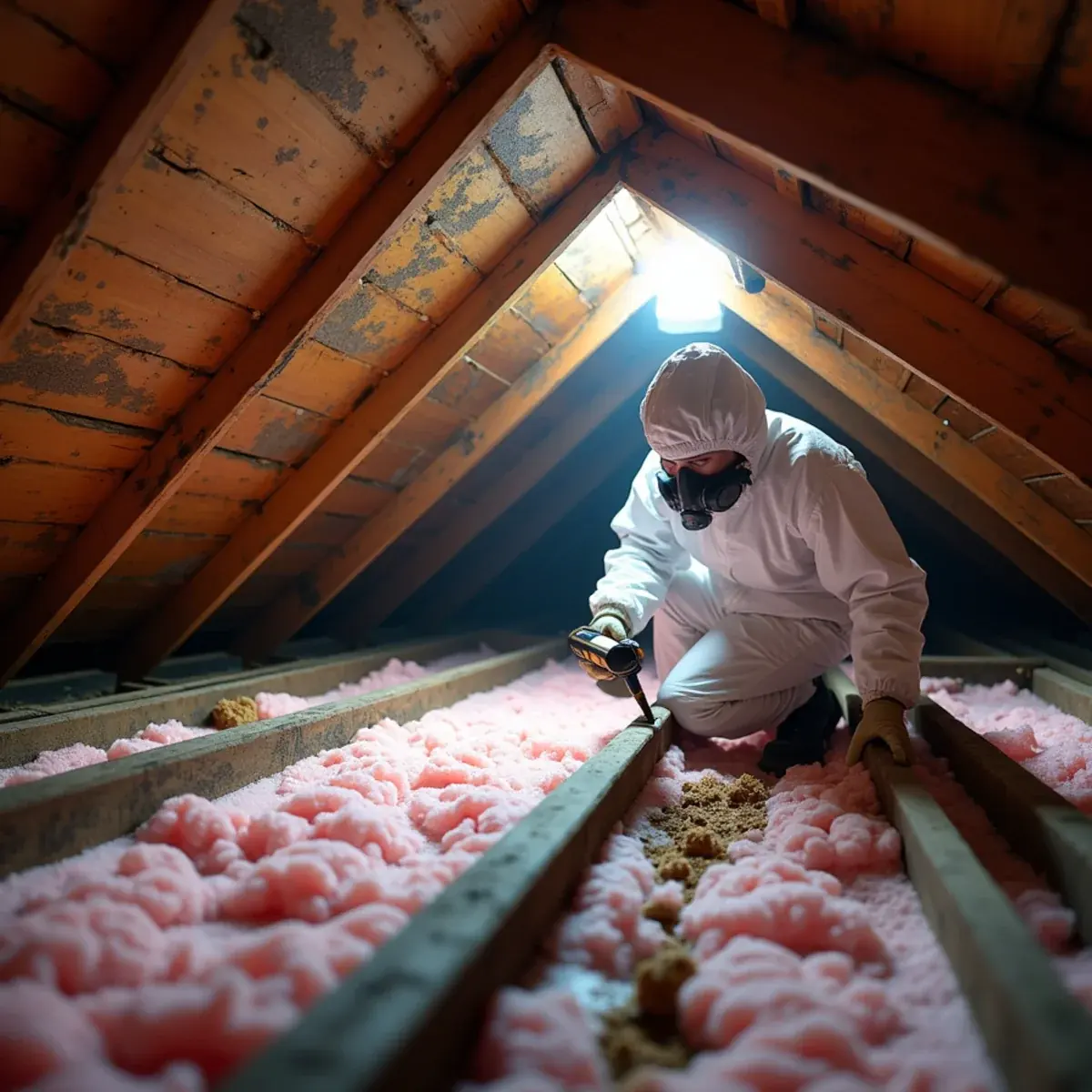
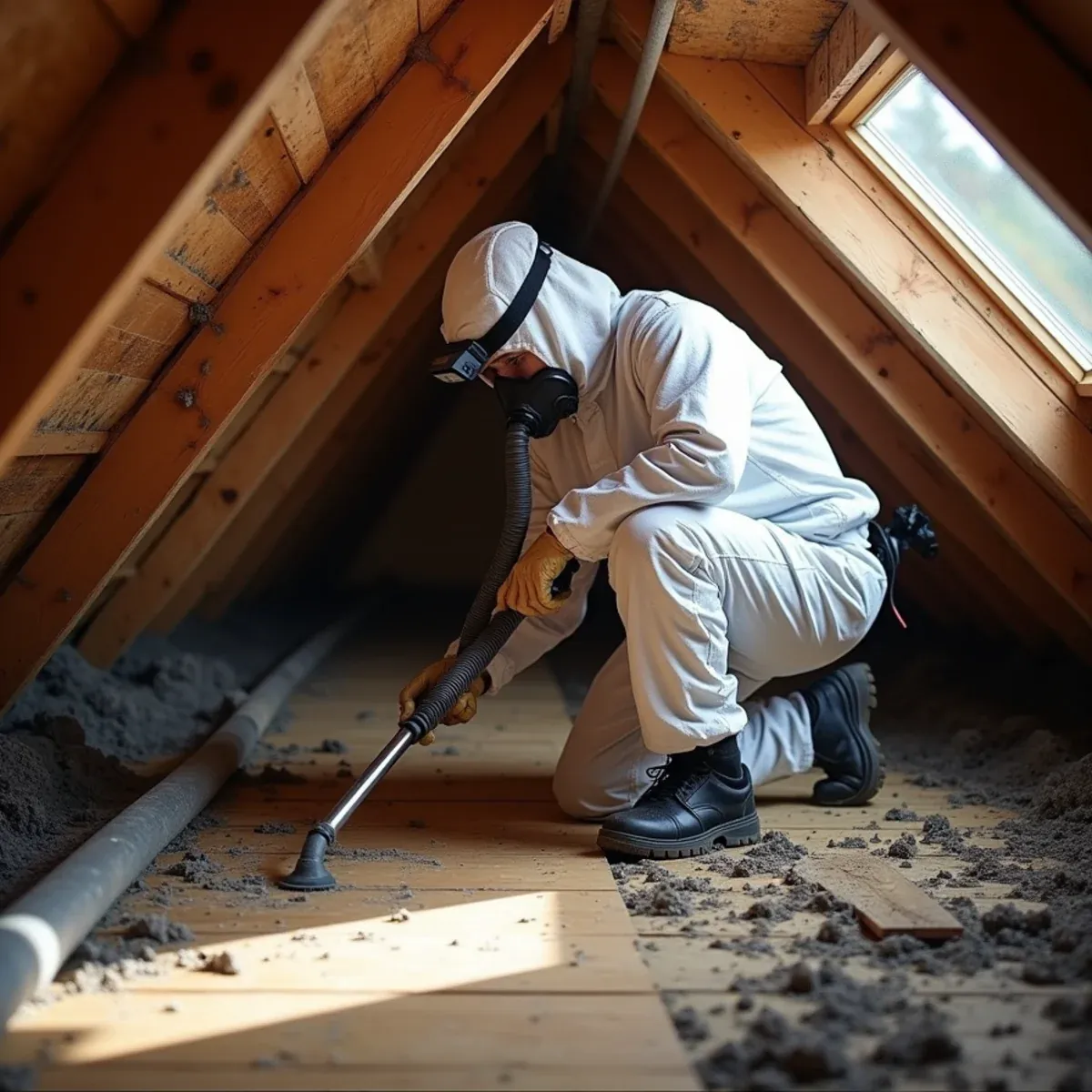
Attic mold usually traces to a roof leak, a bath fan ducted into the attic instead of outside, or eave vents buried under blown-in insulation. Removal means bagging wet insulation, HEPA-vacuuming the sheathing and rafters, and cleaning or sanding the wood. Sound sheathing rarely needs replacing, but the roofer has to fix the leak before new insulation goes in.
Crawl space mold
Crawl spaces are uncommon in Buena Park's slab tracts, but they turn up in some pre-1950 homes, in room additions, and in older neighborhoods nearby, such as those on our Fullerton mold remediation page. There, mold grows on joists and subfloor above damp soil, and the fix pairs cleaning the wood with better drainage, venting or a vapor barrier.
HVAC mold cleaning
In most ranch homes the furnace sits in a hall closet or garage with ducts in the attic. Mold shows up at the AC coil and drain pan and on supply registers that sweat on damp mornings. Duct cleaning is not automatic; it belongs in the scope only when growth or debris is found inside the system. Keep the system off while a moldy room is opened up.
Fixing the moisture source so the mold does not return
If a leak keeps feeding the wall, new drywall grows mold again, sometimes within weeks. The source has to be named and fixed before anything is rebuilt.
- Slab leaks: a plumber repairs the line or reroutes the supply overhead. After one pinhole, a reroute often beats waiting for the next.
- Showers: a failed pan means rebuilding the shower, not recaulking it.
- No bath fan: add one ducted outside and run it after every shower.
- Roofs and windows: flashing and seals repaired before the rainy season.
- Condensation: AC drain lines cleared and attic ducts sealed.
The mold crew does not replace your plumber or roofer, but it should give you moisture readings to hand them. For a recent leak, see mold after water damage for the drying side.
Pre-1980 homes: asbestos and lead checks before any tear-out (South Coast AQMD Rule 1403)
With a median build year of 1965, most Buena Park homes predate 1980, when drywall joint compound, acoustic “popcorn” ceilings and sheet vinyl flooring could still contain asbestos. Cutting out moldy drywall disturbs exactly those materials.
South Coast AQMD Rule 1403 requires an asbestos survey before renovation that disturbs suspect materials. The single-family exception covers less than 100 square feet of intact material, and a full slab-edge wall or bathroom ceiling can pass that quickly. Lab results usually add a day or more.
If the survey finds asbestos, a separately certified abatement contractor removes it first. Buena Park Mold & Water Damage Pros does not offer asbestos abatement. Homes built before 1978 may also have lead paint, so painted surfaces call for lead-safe work practices.
What affects the cost of mold removal
Every job is priced from a site visit, with the scope and price in writing before work starts. What moves the number:
- Size of the area and how many rooms the containment covers.
- Access: an open bedroom wall is quicker than a low attic or a wall behind cabinets.
- What comes out: drywall alone, or insulation, flooring and trim too.
- Asbestos survey results and any abatement.
- Drying time and equipment days.
- HVAC work on the coil, pan or ducts.
- Clearance testing if you want independent verification.
- Rebuild, often quoted separately.
Every mold remediation crew we send is licensed where California requires it, and insured. Our guide to mold remediation cost in Buena Park shows how to compare two quotes line by line.
Comparing two mold removal scopes
Two quotes for the same bathroom can describe different jobs. Line them up and check:
- How many square feet of drywall come out, and at what height the wall is cut.
- Whether insulation, baseboard, carpet pad or flooring is listed, or left to a change order.
- How many containment areas and HEPA air scrubbers, and for how many days.
- Whether the asbestos survey is included, excluded or assumed unnecessary.
- Which photos, moisture readings and disposal records you get at the end.
How long removal takes and whether you can stay home
One contained area, such as a bathroom wall or a stretch of slab-edge drywall, often takes one to three days on site. Multi-room and attic jobs can run close to a week. Add time for the asbestos survey in an older house and for the plumber or roofer to fix the source.
Many families stay home, because containment keeps the dust in the work area. Move out for a few days if the work includes your only bathroom or the kitchen, or if an infant, an older adult or someone with asthma or a weak immune system lives there. Those family members should stay out of the work area and talk to their doctor.
Rebuilding runs on its own schedule, so ask for both timelines up front. Call (831) 303-1192 to talk through how a job would be sequenced in your house.
Why the rebuild waits for dry readings
On a slab-edge wall, the bottom plate resting on the concrete is usually the last piece to dry, and the slab under pulled flooring can stay damp after the studs read fine. Structural drying and dehumidification continue until those materials match a dry reference spot elsewhere in the house.
- The plumber or roofer finishes the repair, and the fix is noted in the job file.
- Moisture readings are logged at each visit until every affected material reaches the dry target.
- Post-remediation verification: a visual check against the written scope, a review of the readings, and clearance testing after removal if it was agreed in writing.
- Containment comes down, and a CSLB-licensed contractor closes the wall.
The same crews handle mold removal in La Palma, mold removal in Cypress and, across the county line, mold removal in La Mirada. See every mold remediation service area near Buena Park.
Mold Removal: common questions from Buena Park
How much does mold removal cost in Buena Park?
It depends on the size of the affected area, how many materials come out, access, drying time and whether an asbestos survey is needed first in an older home. A small contained bathroom job and a slab leak that soaked three rooms of flooring are very different scopes. You get a written scope and price from a site visit before any work starts. Ask whether rebuild work is included, since it is often quoted separately.
Can I stay in my home during mold removal?
Usually, yes. With the work area sealed in plastic and an air scrubber filtering air out of it, the rest of the house stays livable, and many families sleep at home through a short job. Plan to stay elsewhere if the kitchen or your only bathroom is inside the containment, if several rooms are involved, or if someone with asthma, an infant or an older relative lives with you. They should talk to their doctor.
Can I just clean mold with bleach?
On tile or glass, a household cleaner handles small surface spots. Bleach is a poor choice for drywall, wood or anything porous: the water soaks in, the chlorine stays on the surface, and growth inside the material survives. It does nothing about the leak either. EPA guidance says homeowners can often clean areas under about 10 square feet with detergent, water, gloves and eye protection. Anything larger, inside a wall or recurring calls for contained removal.
Does homeowners insurance in California cover mold removal?
Sometimes. Most California policies exclude mold from long-term seepage, humidity or neglect. Mold that follows a sudden, accidental water event the policy covers, like a burst supply line, may be covered, often up to a mold sublimit far smaller than the rest of the policy. Read your policy and call your insurer before work starts; photos and moisture readings help. See homeowners insurance and mold in California. This is not legal advice.
When does moldy drywall have to be cut out instead of cleaned?
When growth goes past light spotting on the painted face, when the back of the board or the wall cavity has mold, or when the board is soft from water. Drywall is paper over gypsum, and both hold moisture and growth below the surface, so wiping it leaves mold behind. Light spotting on painted drywall that reads dry can sometimes be cleaned. The crew decides with a moisture meter and a look inside the cavity, and the scope lists what comes out.
Is rebuilding the wall part of mold removal?
Usually it is a separate step, and often a separate price. Removal ends when the area is cleaned, dried and checked; then new insulation, drywall, paint, baseboard or flooring goes in. Work that alters the structure and runs $1,000 or more needs a CSLB-licensed contractor, so ask who holds the license for the rebuild and look it up. Get both timelines with the scope, since the rebuild cannot start until the readings are dry.
Mold Removal beyond Buena Park
The same crews cover the cities around Buena Park, 5 to 20 minutes out by I-5, SR-91 and Beach Boulevard. See how mold removal works in the housing stock of each city, or view all mold remediation service areas.