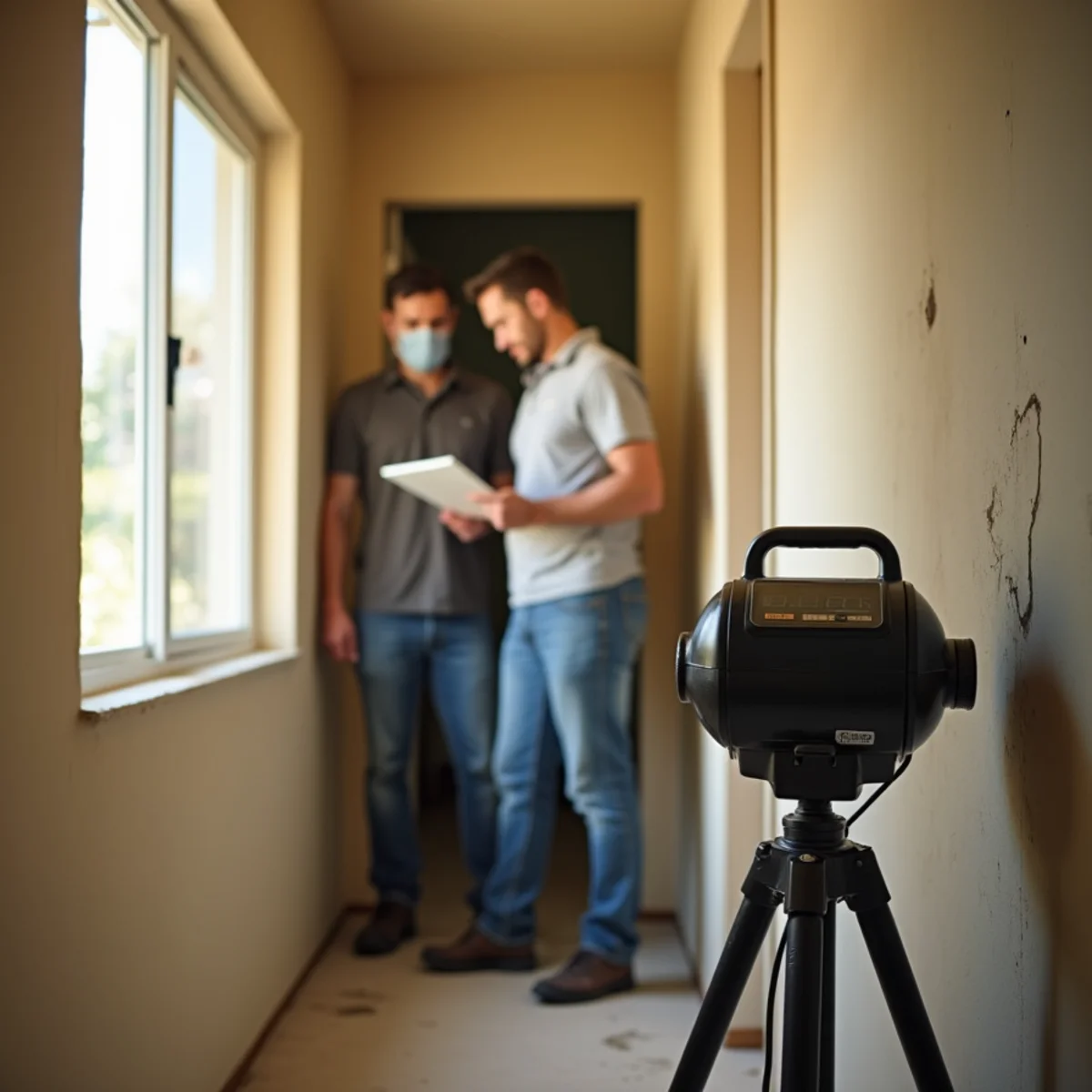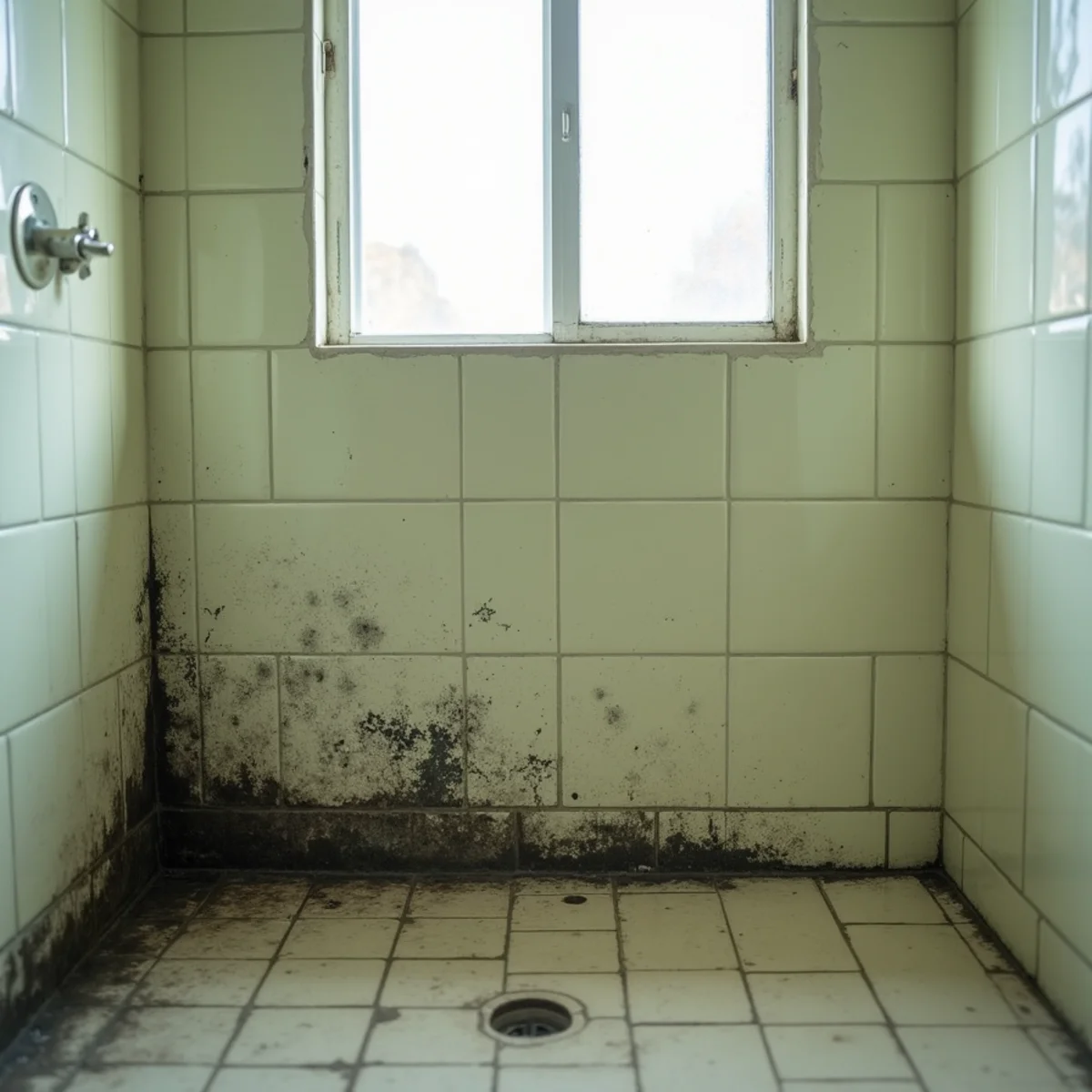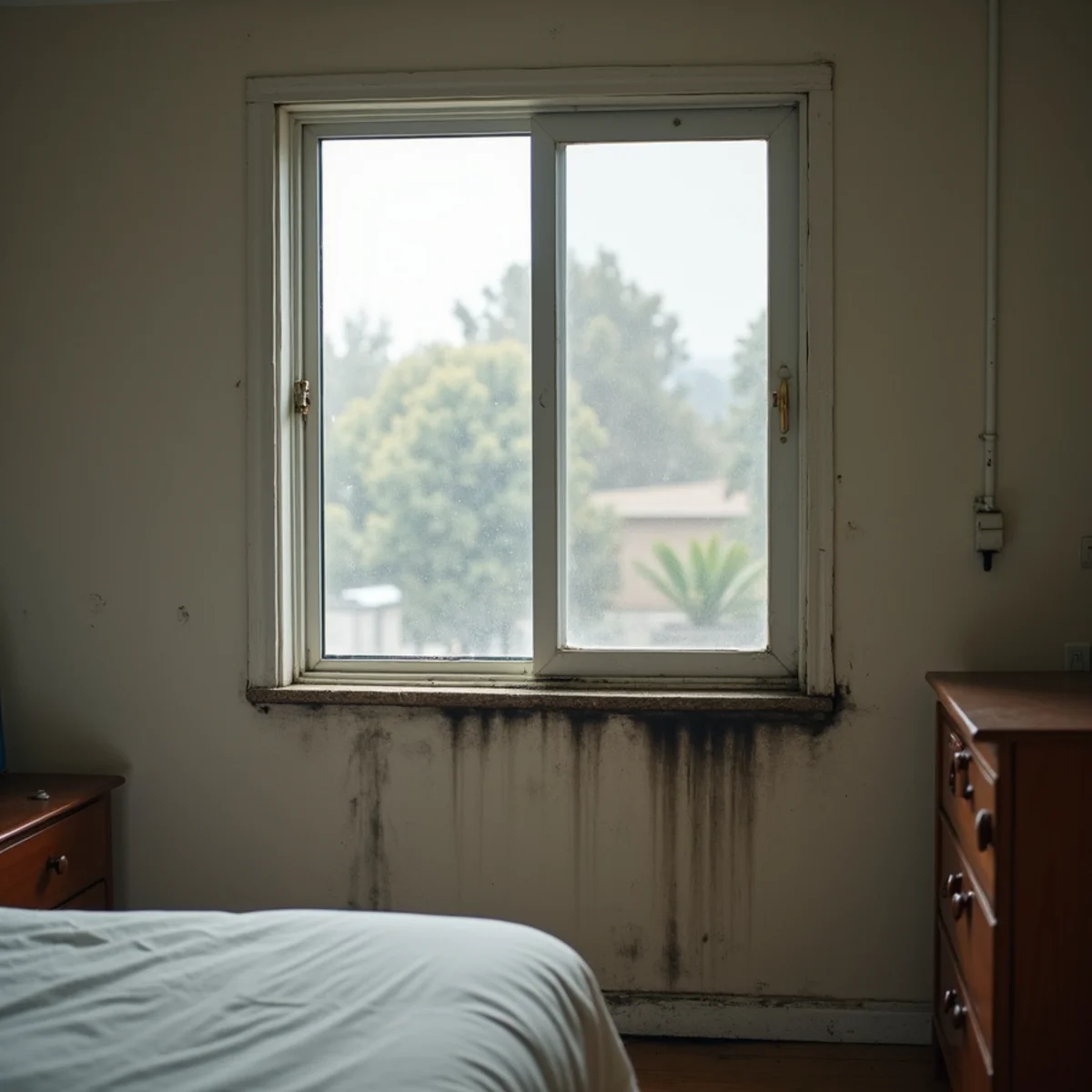
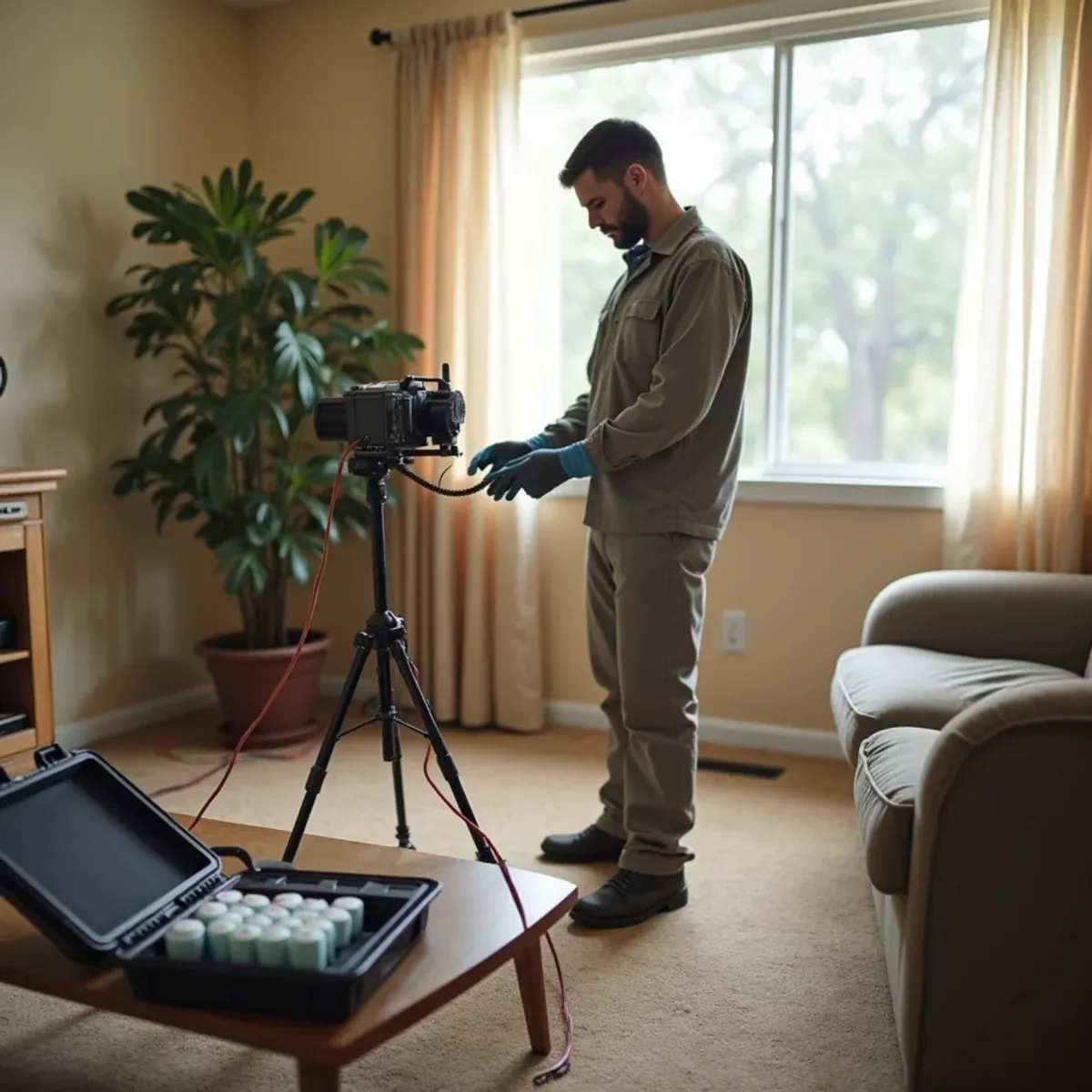
Mold testing puts a name and a number on what is in the air or on a surface. A technician collects air samples inside and outside the house, or swab, tape and bulk samples from a suspect spot, and sends them to a third-party laboratory. The lab report lists which types of spores were found and how many.
A lab result answers specific questions, like a landlord dispute or proof that removal worked. It is not always the first thing to buy. Call (831) 303-1192 at any hour to talk it through before you book.
Reviewed by the Buena Park Mold & Water Damage Pros team · Updated · Process references: IICRC S520 (2024), CDPH mold guidance, CSLB contractor rules
The short answer
Mold testing in Buena Park means collecting air samples indoors and outdoors, or swab, tape-lift or bulk samples from a surface, and having a lab identify and count the spores. Results usually come back within a few business days. Testing is most useful for disputes, home purchases and clearance after removal, not as a first step.
When mold testing is worth paying for (and when it is not)
If growth is visible and the water source is known, a lab report tells you what you already know, and the money is better spent on removal and the leak.
Worth it
- A strong musty smell, but a moisture inspection found nothing obvious.
- A landlord and tenant disagree about whether there is a problem.
- A buyer wants evidence before releasing a contingency on a house with a leak history.
- A doctor has asked whether the home has elevated mold.
- Removal is finished and you want proof before the walls are closed.
Usually not
- You can see the mold and know what caused it.
- You want to know whether the house has “any” mold. Every house does; spores are part of normal outdoor air.
Not sure? Start with a mold inspection in Buena Park, or read mold inspection vs mold testing.
Name the question before anyone samples
A useful test answers one question, and the question picks the sample. If no possible result would change what you do next, skip the test.
- Is this stain mold? One tape lift.
- Is something growing out of sight in this room? Indoor air samples against an outdoor baseline, sometimes with a wall-cavity sample.
- Has it spread beyond one room? An air sample in each room of concern, plus the outdoor baseline.
- Did the removal work? Clearance samples inside containment after final cleaning and dry readings.
Air sampling: indoor vs outdoor spore counts
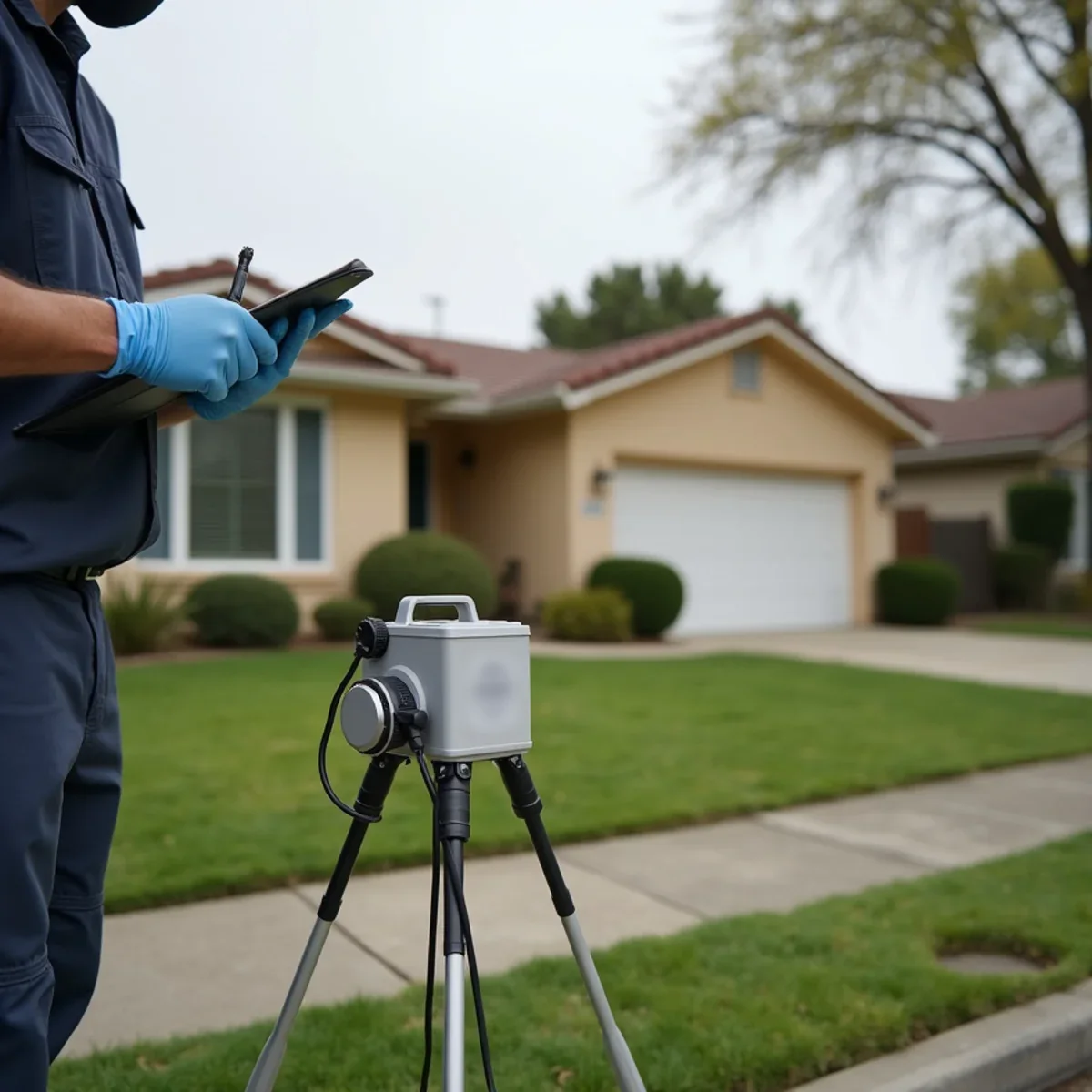
A calibrated pump pulls a measured volume of air through a small spore-trap cassette for a few minutes. The lab counts and identifies the spores caught on the sticky slide inside.
Why the outdoor baseline matters
Indoor air is never spore-free, so indoor numbers only mean something next to an outdoor sample taken the same day. In a healthy house, indoor counts are usually lower than outdoor and made of the same types. A problem shows up as indoor counts well above outdoor, or as types indoors that are scarce outside, such as Stachybotrys or Chaetomium.
Local weather moves the baseline. A gray marine-layer morning in June, a dry breezy afternoon in October and the day after a February rain can each give different outdoor counts, so the outdoor sample is taken alongside the indoor ones and the conditions are noted.
- Keep windows closed and skip heavy cleaning or vacuuming the day of the test.
- A wall-cavity sample through a small port is possible, with your permission.
Surface sampling: swab, tape lift and bulk samples
Surface samples show what grows on one spot, not what you breathe, so they are paired with air samples or an inspection.
- Swab: a sterile swab rubbed over a small area and sealed in a tube. Good for rough spots like grout lines or the back of a cabinet.
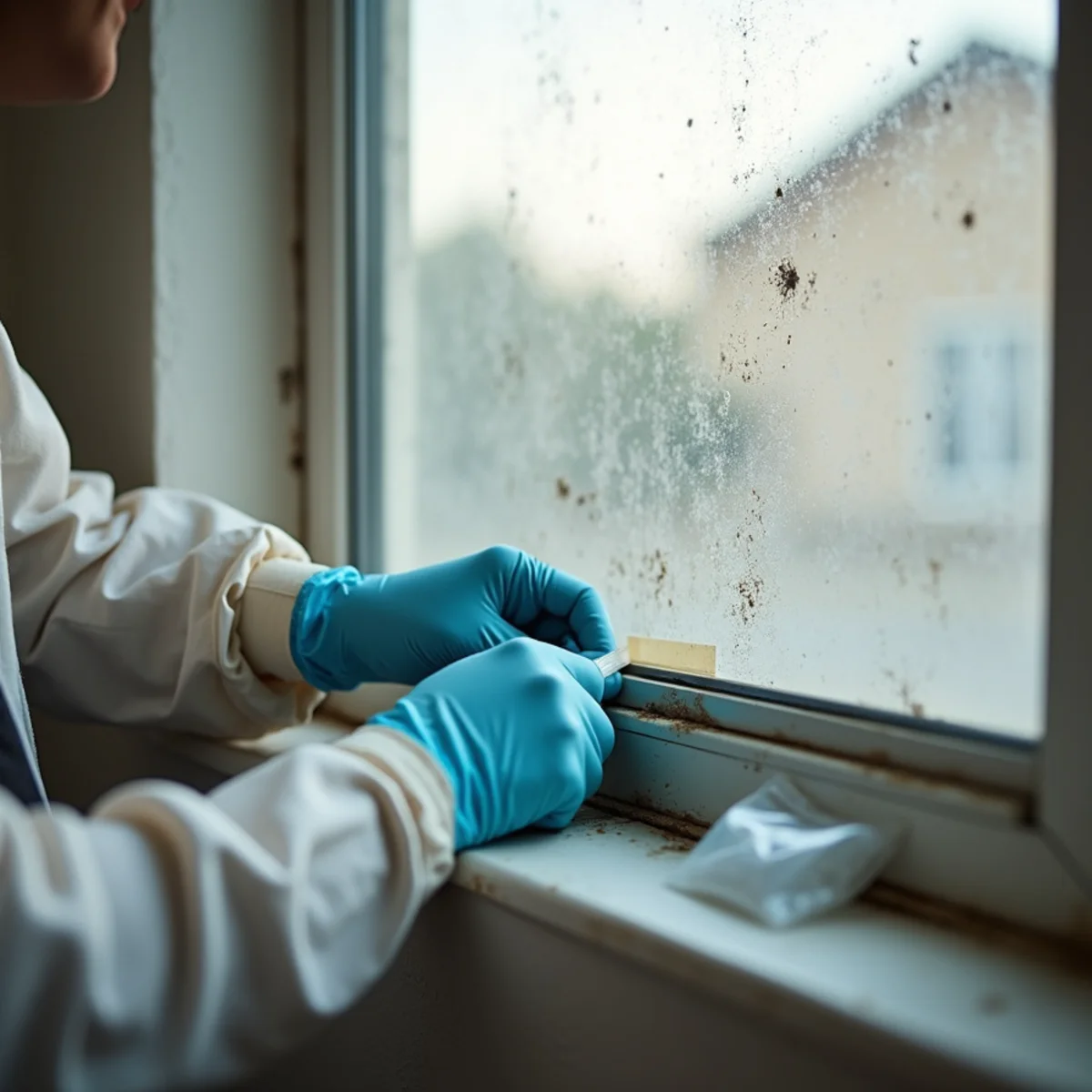
- Tape lift: clear tape pressed on the surface and mounted on a slide. Quick and cheap for telling whether a dark stain is mold growth or just dust.
- Bulk: a small piece of the material itself, like a square of carpet pad or drywall paper, used when growth may be inside it.
In older apartment buildings along Beach Boulevard, the question is often whether dark spotting around aluminum window frames is mold feeding on condensation, and one tape lift answers it. For bathroom spotting, black mold vs mildew explains what you are likely looking at.
Reading a lab report: species, spore counts and what they mean
- Spore type: usually by genus, such as Cladosporium, Alternaria or Stachybotrys. Spore traps cannot separate Penicillium from Aspergillus, so they are reported together.
- Raw count: spores actually counted on the slide.
- Count per cubic meter: the raw count scaled to the air volume sampled; the figure most people compare.
- Detection limit: “not detected” means below this limit, not zero.
- Background debris: heavy dust on the slide can hide spores and weaken the result.
- Hyphal fragments: broken pieces of growth that can point to active or disturbed mold.
Read indoor and outdoor columns side by side. Cladosporium indoors at outdoor levels is normal. Penicillium/Aspergillus several times higher inside, or any meaningful count of Stachybotrys or Chaetomium, suggests an indoor source. Whoever takes the samples should walk you through the report.
Clearance testing after remediation
Clearance testing, or post-remediation verification, checks that a removal job worked while the containment is still up and a failed area can be recleaned cheaply.
- The crew finishes cleaning and the framing reads dry.
- The tester checks inside the containment for visible growth, dust and debris.
- Air samples inside the containment are compared with an outdoor sample.
- If the area passes, the plastic comes down and rebuilding starts. If not, it is cleaned again and retested.
Agree on the pass criteria in writing before work begins. After a larger mold removal job or black mold removal, ask for a tester with no stake in the removal.
The two terms are often used as one, but they are not quite the same. Post-remediation verification is the whole check: the source fixed, materials reading dry, no visible growth or dust, and the records in order. Clearance testing is the lab sampling some jobs add to that check. A job can pass verification without lab samples, but a good air result cannot pass a job with a wet wall.
Who does the final test, and under what protocol
Settle these points in writing before removal starts:
- Who samples: the remediation contractor, or an independent tester with no stake in the job.
- When: after final cleaning and dry readings, while containment is still up.
- Where and how many: samples inside each containment, an outdoor baseline, and often a room outside the work area for comparison.
- Pass criteria: what visual result and what indoor-to-outdoor comparison count as a pass.
- A failed result: who pays to reclean and retest.
Why California sets no official 'safe' mold level (CDPH guidance)
People often ask what spore count is safe. The California Department of Public Health sets no safe or acceptable indoor mold level, because sensitivity varies from person to person and sampling cannot measure exposure in a way that maps to health effects.
CDPH puts the emphasis on moisture and does not recommend testing as a first step: fix the water, remove the growth. Be wary of anyone who labels a result “toxic” from a number alone. People with asthma or allergies, infants, older adults and anyone with a weak immune system should talk to their doctor about symptoms.
The same caution applies at the end of a job. CDPH notes that testing alone does not determine whether remediation succeeded. A clean air sample taken while a slab line is still leaking proves very little, so read clearance results alongside the moisture readings, photos and visual check, not in place of them.
DIY test kits vs professional sampling
Most hardware store kits use a settle plate: a dish of growth medium left open in a room for an hour, then watched for a few days. Settle plates are unreliable. Spores are in every house, so the dish nearly always grows something, and there is no measured air volume and no outdoor comparison. A full plate does not prove a problem, and a clean plate does not rule one out.
Mail-in analysis identifies what grew but still lacks a baseline. For a result others will accept, use professional sampling.
What affects mold testing cost and turnaround
- Number of samples: each carries a lab fee, and every air test needs an outdoor baseline.
- Analysis type: spore traps and tape lifts are read under a microscope; culture samples must grow first.
- Turnaround: standard results take a few business days; rush service costs more.
- Purpose: a screening versus clearance with written pass criteria.
- Property size: a single-story house versus a two-story home in the Los Coyotes area or several apartment units.
You get the price before samples are taken; call (831) 303-1192. Every mold remediation crew we send is licensed where California requires it, and insured. Testing covers Buena Park plus mold testing in La Palma, Cypress mold testing and mold testing in La Mirada; see all service areas near Buena Park.
Mold Testing: common questions from Buena Park
How long do mold test results take?
Spore-trap air samples and tape lifts are usually analyzed within a few business days, and most labs offer rush service for an added fee. Culture samples, where the lab grows the mold to identify it, take longer, often a week or more. If you are working against an escrow deadline or a tenant notice, say so when booking so the right turnaround is chosen from the start.
Can a test tell me if the mold is toxic?
No. A lab can identify the type of mold, including Stachybotrys, the one often called “toxic black mold.” Some molds can produce mycotoxins under certain conditions, but a standard test does not measure them or show whether anyone was exposed to a harmful amount. CDPH treats any indoor mold growth as something to remove, whatever the type. If you have health concerns, talk to your doctor and bring the report along.
Do I need testing before remediation starts?
Usually not. If the mold is visible and the moisture source is known, removal can be planned from an inspection, and a test adds cost without changing the plan. Pre-removal testing makes sense when the scope is unclear, when a landlord, insurer or buyer wants a baseline, or when you want before and after numbers to compare with clearance. In a home built before 1980, the asbestos survey matters more to the schedule than a mold test.
Should the tester be separate from the remediation company?
For clearance testing, it is a good idea, since a company that tests its own work has a reason to pass it. The contractor who removes the mold may also offer testing, which is common, but you can ask for an independent tester with no stake in the job. Tell us when you call and we will say plainly whether we can arrange it. For a screening test before any work, independence matters less if the results are explained honestly.
What should I ask before paying for a mold test?
Ask what question the test will answer and how each possible result would change the plan. Then ask how many samples are included, whether the outdoor baseline is part of the price, which lab analyzes them, how long results take and who will walk you through the report. If the answer to the first question is vague, the test is probably not worth buying yet, and a moisture inspection may be the better first step.
What happens if a clearance test fails?
The containment stays up, the crew cleans the area again, and the tester resamples once it is ready. A fail often traces to fine dust left on surfaces or a spot that was missed, so ask the tester which samples failed and by how much compared with outdoors. Who pays for the second round should already be in the written agreement. Rebuilding waits until the area passes the agreed criteria.
Mold Testing beyond Buena Park
The same crews cover the cities around Buena Park, 5 to 20 minutes out by I-5, SR-91 and Beach Boulevard. See how mold testing works in the housing stock of each city, or view all mold remediation service areas.