Close to half of Buena Park households rent (45.6 percent by the Census count), so many local mold calls come from apartments, condos and rental houses. Those jobs involve more people: a tenant living with the problem, an owner or manager who has to fix it, and sometimes an HOA board or a code enforcement deadline. Call (831) 303-1192 at any hour.
The removal follows the containment and removal approach described in IICRC S520, the same as in a house. What changes is the scheduling, the paperwork and the detective work, because water in a two-story building rarely stays in one unit. Every job ends with dated photos, moisture readings and a written completion report.
Reviewed by the Buena Park Mold & Water Damage Pros team · Updated · Process references: IICRC S520 (2024), CDPH mold guidance, CSLB contractor rules
The short answer
Apartment mold remediation in Buena Park means finding where the water comes from, often a shared wall, a window or the unit above, then removing the growth inside sealed containment while tenants stay protected. Owners get photos, moisture readings and a completion report for code enforcement, HOA or insurance files. Call (831) 303-1192, 24/7.
Who this page is for: landlords, property managers, HOAs and tenants
- Landlords and small owners who need the mold gone, the source found and a record showing they acted promptly.
- Property managers who need predictable scheduling and reports that fit the building file.
- HOA and condo boards settling whether growth started in a common-area pipe or inside one unit, which often decides who pays.
- Tenants who want to know what proper remediation looks like, so fresh paint is not passed off as a fix.
Tenants usually cannot hire a contractor to open the landlord's walls, but can photograph the problem and give written notice, as our guide to who is responsible for mold in a California rental explains. Owners and managers can call (831) 303-1192 to book the work.
Visible mold and California housing standards (SB 655, Health and Safety Code 17920.3)
SB 655, passed in 2015, added visible mold growth to the substandard-housing conditions listed in Health and Safety Code 17920.3, as determined by a health officer or code enforcement officer. Minor growth on surfaces that get wet in normal use, such as shower grout, is excluded.
Civil Code 1941.1 describes a habitable rental, including waterproofing and weather protection of the roof and exterior walls, unbroken windows and doors, and plumbing in good working order. Most rental mold traces back to one of those items failing. That is why the source repair matters as much as the cleanup.
Common sources in Buena Park apartments: shared plumbing walls, bathrooms without fans, window condensation, leaks from the unit above
Most Buena Park apartment buildings are two-story stucco walk-ups from the 1960s through the 1980s, with bathrooms stacked one above the other. That layout repeats the same few sources.
Shared plumbing walls and stacked bathrooms
Two units often share one wet wall holding both sets of supply lines and drains. Orange County's hard water corrodes copper, and a slow drip can soak drywall on both sides for months before anyone sees a stain.
Bathrooms without exhaust fans
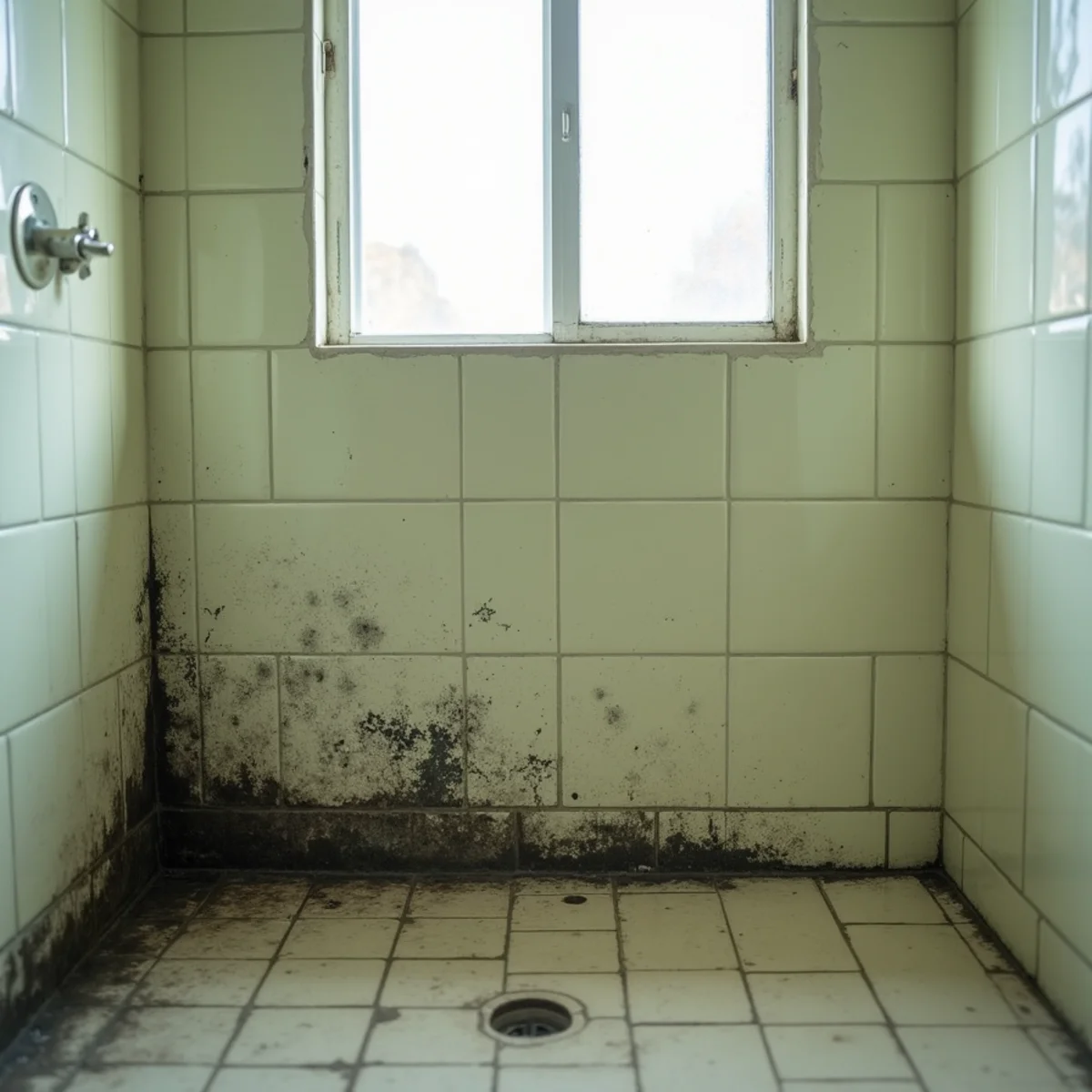
Many older bathrooms rely on a small window, and some interior ones have no fan at all. Daily showers with the window shut grow mold on the ceiling over the tub, so adding a fan is often part of the fix.
Condensation on aluminum single-pane windows
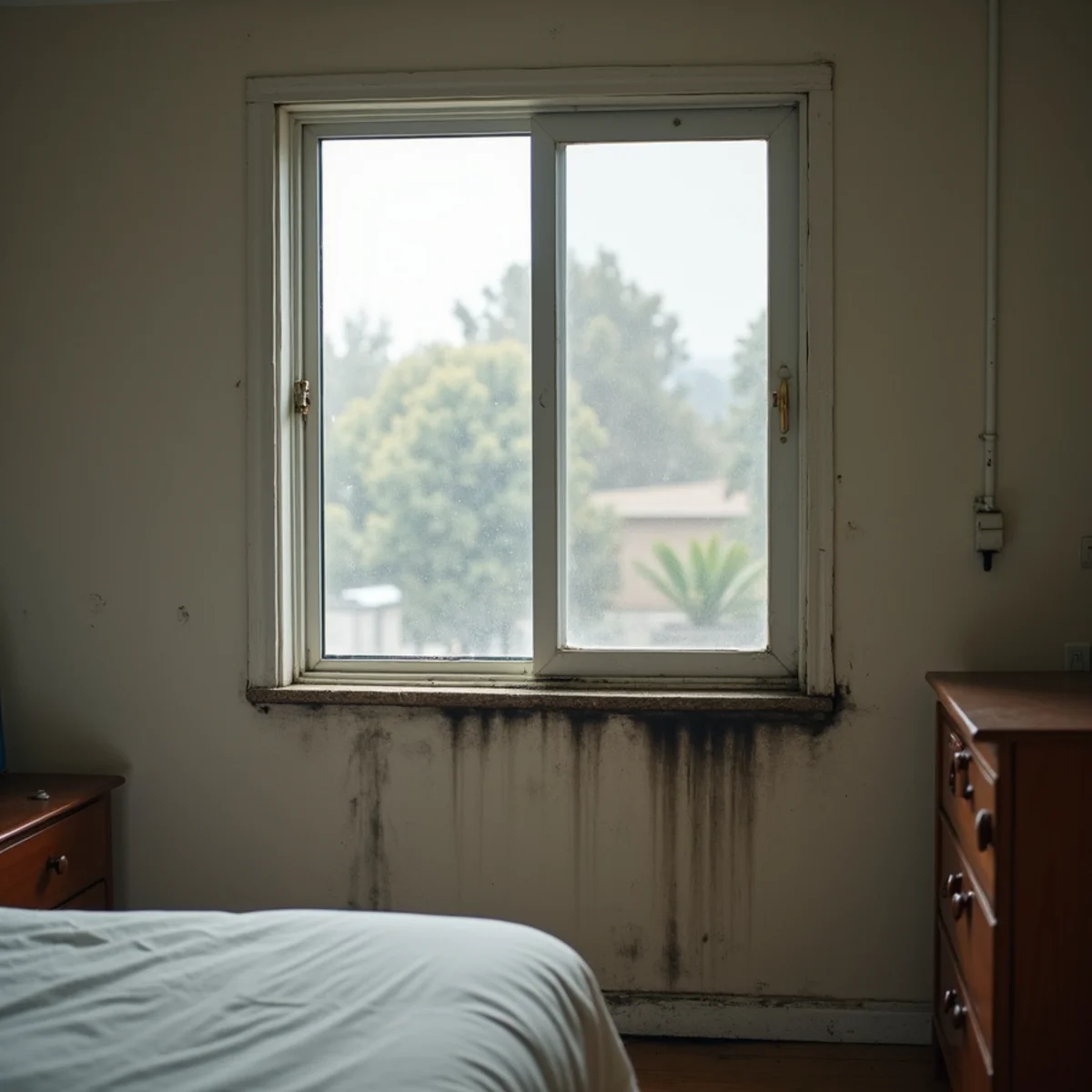
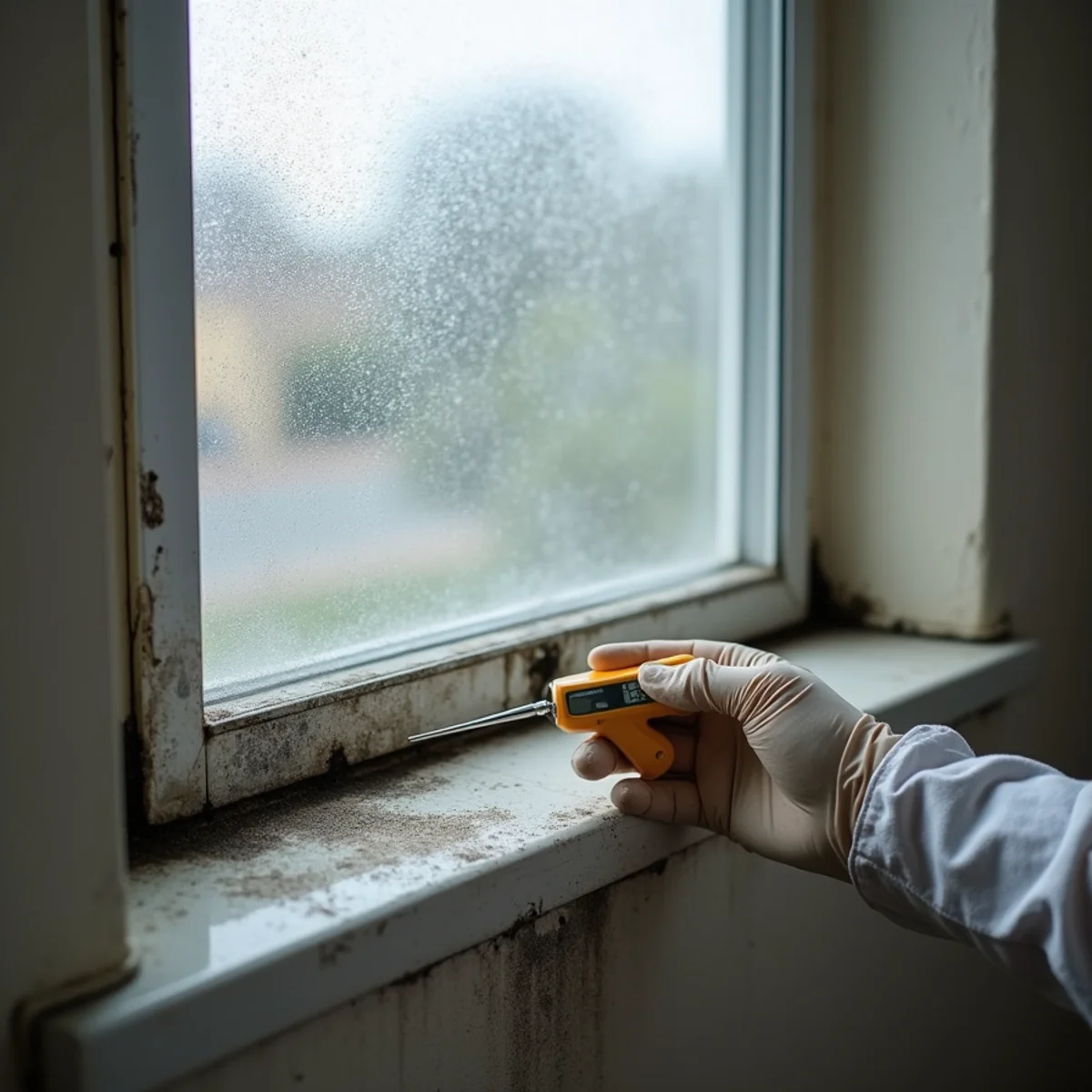
Original aluminum single-pane windows turn cold on winter nights and marine-layer mornings. Condensation runs into the sill and wets the drywall below, where dark spotting shows up first. Tenants often get blamed, but the window is much of the cause. When spotting spreads into the wall, black mold removal follows the same contained process.
Leaks from the unit above
An overflowing tub or failed toilet wax ring upstairs sends water into the ceiling below, which can look normal until a brown ring forms around a light fixture. Top-floor roof leaks after storms like February 2024 look the same.
Working in occupied units: containment, scheduling and tenant notice
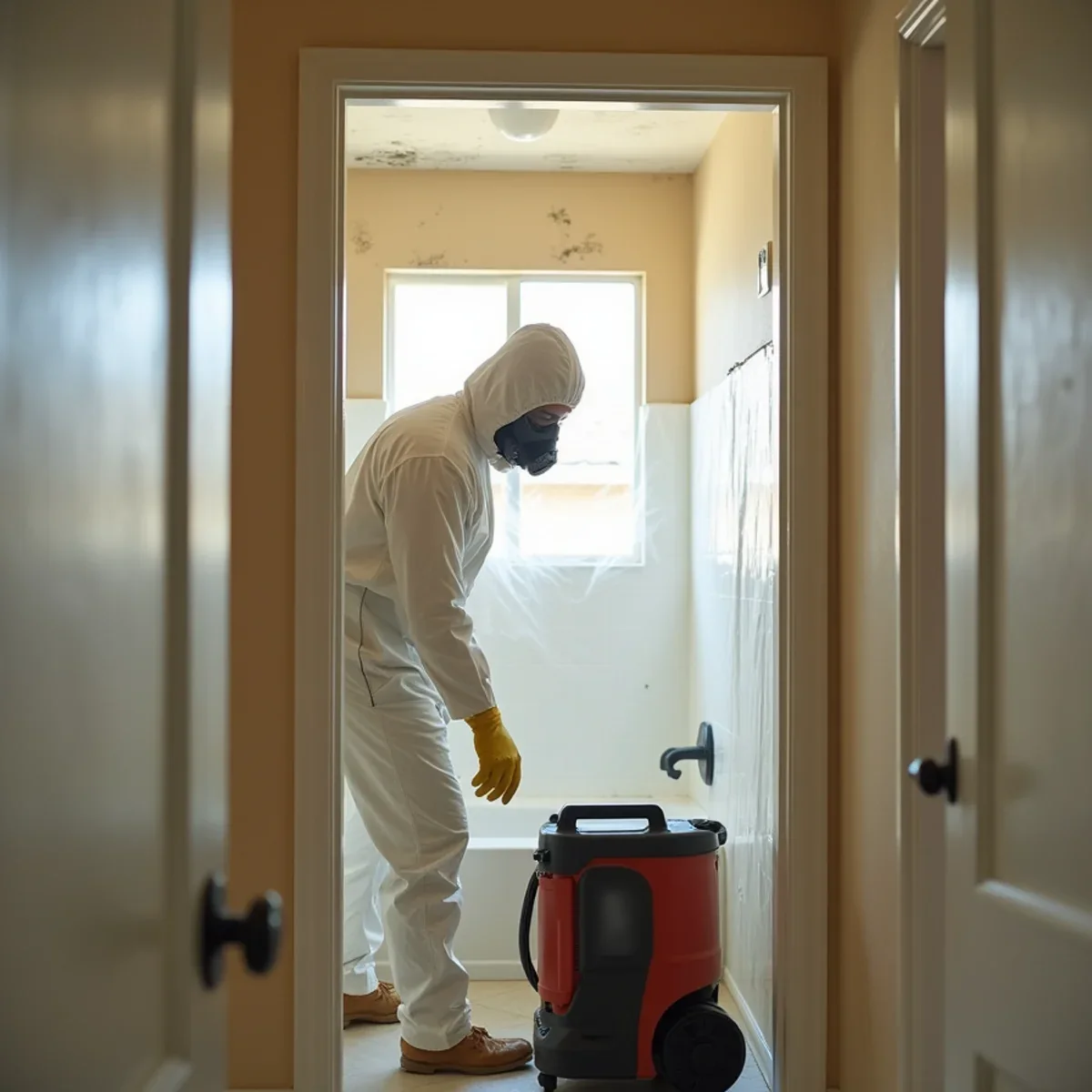
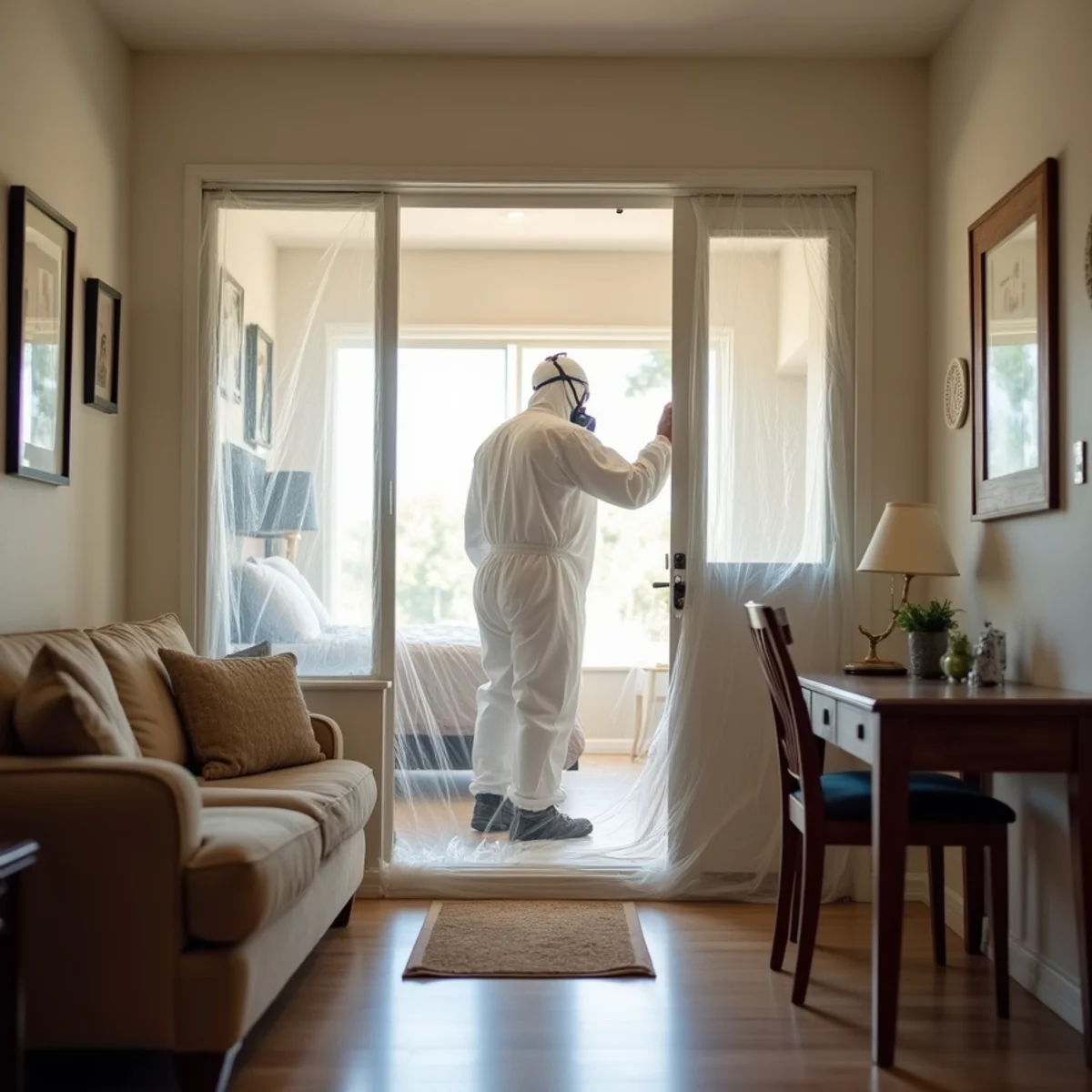
Most apartment mold work is done with the tenant still living there. Crews seal the work area with plastic containment and a zipper door, and run a HEPA air scrubber under negative pressure so dust is drawn away from the living space.
Tenant notice
California generally requires 24 hours written notice before an owner enters a unit for repairs (Civil Code 1954), with exceptions for emergencies. Crews work to the manager's schedule, and tenants appreciate knowing how long the job takes and which rooms will be closed.
Scheduling around the building
- Bathroom jobs can leave a tenant without a shower for a day or more.
- When a household includes someone with asthma, a newborn or a weakened immune system, relocating during the work is safer, and they should talk to their doctor.
- Pre-1980 buildings may need an asbestos survey before tear-out under South Coast AQMD Rule 1403. Its small-job exception is written for single-family residences, so apartment buildings usually need the survey, adding a day or more.
Multi-unit leaks: tracing moisture between units
Mold in one unit often started with water from another, so the manager may need to arrange access to several doors. A typical trace:
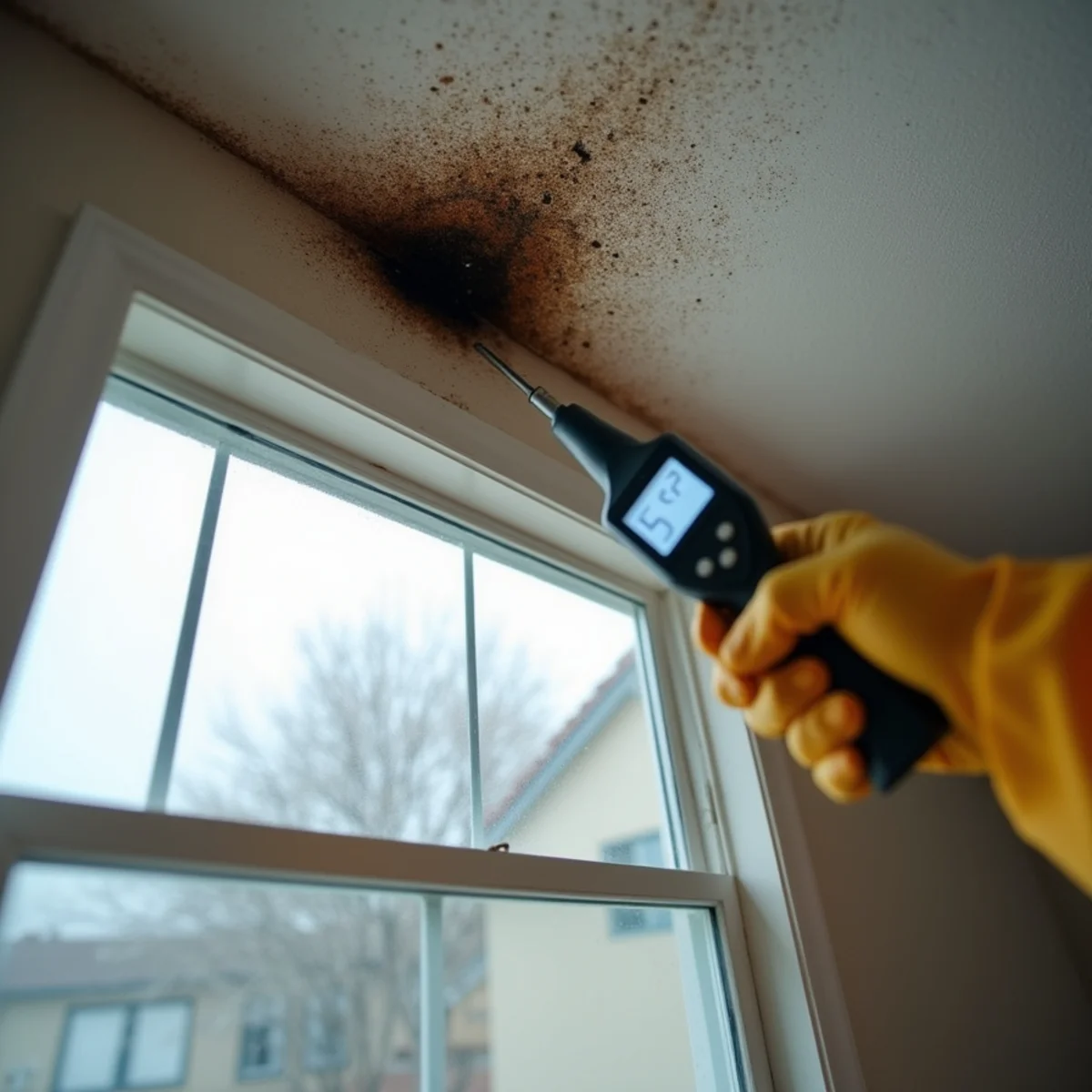
- Map the wet area with a moisture meter to find where readings peak.
- Check the plumbing in that wall or ceiling, including any shared drain stack.
- Look upstairs for failed caulk, a cracked shower pan or a leaking appliance line.
- Rule out roof drains, balcony decks and poorly flashed windows, using thermal imaging before anything is opened.
A plumber or roofer repairs the source, and the mold crew handles each affected unit. If the source cannot be confirmed without opening a wall, the report says where to open next. For growth after an obvious pipe or roof failure, see mold after water damage.
Documentation: photos, moisture readings and a completion report
Apartment work ends up in a file: maintenance records, an insurance claim, an HOA packet or a code enforcement reply. Every job produces:
- Dated photos before, during and after removal, including the containment.
- Moisture readings at the start and finish, with locations marked.
- The moisture source and the trade responsible for repairing it.
- A room-by-room list of materials removed and surfaces cleaned.
- A written completion report, plus clearance results if testing is ordered.
The fuller pack for a claim or a dispute
When an insurance claim, an HOA dispute or a code case is likely, ask for these before work starts so nothing has to be pieced together later:
- An incident timeline: when the leak was reported, when each unit was entered and when the source was repaired.
- Drying logs with dated moisture readings for each affected wall, ceiling and floor.
- Disposal records showing what was bagged and removed from which unit, with photos keyed to unit numbers.
The company that inspects may also quote the removal. To separate those roles, ask for an independent assessor or independent clearance testing with air and surface sampling.
In a dispute between tenant and owner, owner and HOA, or two insurers, agree the clearance protocol in writing first: who hires the assessor, what acceptance criteria apply, and when the check happens, ideally with containment still up and before walls are closed.
Hotels, restaurants and retail along Beach Boulevard
Beach Boulevard through Buena Park is lined with hotels serving Knott's Berry Farm visitors, plus restaurants, dinner theaters and strip retail, with The Source OC and Buena Park Downtown nearby. Their mold has its own causes:
- Hotel rooms: through-wall air conditioners leak condensate into the wall, and guest showers run for hours a day.
- Restaurants: dish stations, walk-in coolers and ice machines keep walls wet behind stainless panels.
- Retail: roof drains and rooftop HVAC condensate lines drip onto ceiling tiles above sales floors.
Closures cost money, so crews can work overnight or on the slowest day of the week, with containment sized to keep the business open. Give your operating hours when you call (831) 303-1192.
What a commercial scope has to settle
Commercial mold remediation in Buena Park needs a scope that answers four questions before the first panel comes off:
- Occupied areas: which rooms, suites or dining areas stay open, and where containment and the scrubber exhaust sit so guests and staff never pass through the work zone.
- Access: after-hours keys, a service door for bagged debris, roof access for rooftop units, and who from the business meets the crew.
- HVAC: which unit or zone serves the affected space, whether it is shut down or its returns sealed, and who checks the coils and drain pans.
- Business disruption: the work windows, how many rooms or tables come out of service and for how long, and what must be back in order before opening.
What affects cost on multi-unit jobs
Every multi-unit job is priced from a written scope before work starts. What moves the number:
- How many units are affected and how much material comes out of each.
- Whether the source sits in the unit, a neighboring unit, a shared wall or the roof.
- Access: second-floor units, occupied rooms and after-hours work take more labor.
- Containment size and how long air scrubbers and dehumidifiers run.
- An asbestos survey, and abatement by a separately certified abatement contractor if needed.
- Documentation and clearance testing required by the owner, insurer or HOA.
A written scope broken out by unit
Ask for the scope unit by unit, so each owner, tenant or insurer can see their share. For each unit it should name the moisture source (or the working assumption) and the trade repairing it, the affected rooms and materials, containment and air filtration, removal and disposal, the drying and moisture-reading schedule, any HVAC work, rebuilding and who does it, the verification step, exclusions and payment milestones.
Opening a wall often shows growth running into the next unit. That extra work should arrive as a written change order with photos and a price, approved before it starts. California generally requires a written contract for home-improvement work over $500, and work of $1,000 or more that alters the structure needs a CSLB-licensed contractor. Check the license on the CSLB online lookup and confirm it belongs to the company named on the contract that performs the work. Every mold remediation crew we send is licensed where California requires it, and insured.
For single-family rentals, our mold removal service explains the work room by room. Crews cover rental property across the Buena Park service area, including apartment corridors in Stanton and west Anaheim and rental homes in La Palma, Cypress and La Mirada.
Apartment & Rental Mold: common questions from Buena Park
Is a landlord required to fix mold in California?
In most cases, yes. Since SB 655, visible mold growth is a substandard-housing condition under Health and Safety Code 17920.3, and Civil Code 1941.1 expects landlords to keep plumbing, roofs, windows and exterior walls weather-tight and working. Minor mold on normally wet surfaces, like a shower, is treated differently, and tenant-caused damage can shift responsibility. A tenant's usual first step is written notice to the landlord. This is general information, not legal advice.
Can remediation be done while the tenant stays in the unit?
Often, yes. When the affected area can be sealed behind plastic containment with a zipper door and a HEPA air scrubber under negative pressure, the tenant keeps using the rest of the unit. Larger jobs, and households with someone who has asthma, a newborn or a weakened immune system are better handled with the tenant staying elsewhere. The crew will say which applies after seeing the unit.
Who pays when mold comes from a neighboring unit?
It depends on where the leak started. In a complex with one owner, the owner usually pays, and may look to the upstairs tenant only if that tenant caused the damage. In a condo or HOA building, the governing documents decide whether a pipe is common area or an owner's responsibility, and insurers often get involved. Our report records where the moisture came from, the fact those decisions rest on. This is not legal advice.
Do you provide documentation for a code enforcement or insurance file?
Yes. Every job includes dated before, during and after photos, moisture readings at the start and finish, the moisture source and who repaired it, a list of materials removed, and a written completion report. If the file needs third-party confirmation, you can order independent clearance testing after the work. Officers and adjusters decide what they accept, so share the notice or claim letter when you call (831) 303-1192.
Do you handle commercial mold remediation for hotels, restaurants and shops?
Yes. Crews handle mold in Buena Park hotels, restaurants and retail spaces, including along Beach Boulevard. The scope sets which areas stay open, when the crew works, how debris leaves the building and what happens to the HVAC zone serving the affected space. Night and slow-day schedules are common, so give your operating hours and any brand or lease requirements on the first call to (831) 303-1192.
Who should do clearance testing when the tenant and owner disagree?
An independent assessor hired separately from the remediation contractor, with the protocol agreed before work starts. Both sides should know what will be checked: a visual review, moisture readings back to dry, cleaning and disposal records, and sampling only if it answers a specific question. The California Department of Public Health notes that testing alone does not prove a job succeeded. Our completion report gives the assessor the photos and readings to work from. This is not legal advice.
Apartment & Rental Mold beyond Buena Park
The same crews cover the cities around Buena Park, 5 to 20 minutes out by I-5, SR-91 and Beach Boulevard. See how apartment & rental mold works in the housing stock of each city, or view all mold remediation service areas.