Attic Mold After a Roof Leak: What Southern California Homeowners Miss
By Buena Park Mold & Water Damage Pros 8 min read
Quick answer
Attic mold after a roof leak usually grows on the underside of the roof sheathing and rafters near the leak, and in Southern California it often goes unnoticed until the next storm or a home sale because nobody goes into the attic. Fix the roof first, then have the attic checked with a moisture meter. Dry, old staining may need only cleaning and documentation. Active growth on damp wood needs contained removal, and soaked insulation or soft, delaminated sheathing gets replaced.
Why attic mold goes unnoticed in Southern California
Rain here arrives in a handful of winter storms. The atmospheric-river storms of January 2023 and February 2024 found every tired flashing joint and worn shingle in north Orange County, and many of those leaks never reached a ceiling. The water dripped onto insulation, which soaked it up and hid it.
Then Santa Ana winds and summer attic heat dry the wood, the stain stays, and nobody thinks about it until the next storm wets the same spot. After a few cycles, the first sign may be a musty hallway, a spotted ceiling or a home inspector's photo during escrow.
The housing adds to it. Buena Park's median home was built around 1965, and many of those ranch roofs have been redone over the years with varying care around vents and chimneys. In Fullerton, 1920s to 1940s raised-foundation homes near downtown often have older board sheathing and tight attic spaces, while hillside homes in Sunny Hills take wind-driven rain on exposed slopes.
The usual causes, and not all of them are the roof
Winter roof leaks
- Flashing around chimneys, plumbing vents, skylights and wall junctions that has cracked, rusted or pulled loose.
- Worn underlayment in roof valleys, where water concentrates in a heavy storm.
- Clogged gutters that back water up under the edge of the roof and into the eaves.
- Old nail holes from previous repairs and satellite dish mounts.
Bathroom fans venting into the attic
This is common in older ranch homes where a fan was added years later. The duct ends in the attic, or was never connected, so every shower pushes warm, wet air onto the cold roof deck. On winter nights and marine layer mornings that moisture condenses on the wood. The growth pattern gives it away: spread evenly across the sheathing right above the bathroom, with no drip trail. Dryer vents that end in the attic or garage cause the same problem.
Current code is plain about where that air belongs: the 2025 California Residential Code, Section R325.2, says bathroom exhaust air shall be exhausted directly to the outdoors, and Section R325.2.1 requires a humidity-control fan in any bathroom with a tub or shower. When a fan is added or replaced, ask for the duct to run to its own cap on the roof or an outside wall. This is general information, not legal advice.
Blocked soffit vents
Attics need air moving in at the eaves and out near the ridge. When blown-in insulation is piled over the soffit vents, or the vent screens were painted shut, humid air sits in the attic. That usually shows as light, widespread growth on the north-facing side of the roof, which stays coolest.
A patch of growth with a water trail points to the roof. Even, widespread growth points to ventilation.
Staining vs active mold: what you are looking at
Dark marks on attic wood are not all the same, and the difference decides the job.
- Water staining: tan or brown rings and streaks that follow the grain or a drip path. The wood is solid and reads dry on a moisture meter.
- Old, inactive growth: black or gray speckling on wood that is now dry. Not an emergency, but usually cleaned so it does not return with the next leak or turn into an escrow issue.
- Active growth: fuzzy or cottony white, gray, green or black growth on wood that reads damp, often with a strong musty smell when you open the hatch.
- Rot: plywood or board sheathing that is soft, delaminating or crumbling at the edges. That is a structural problem for the roofer, not just a cleaning job.
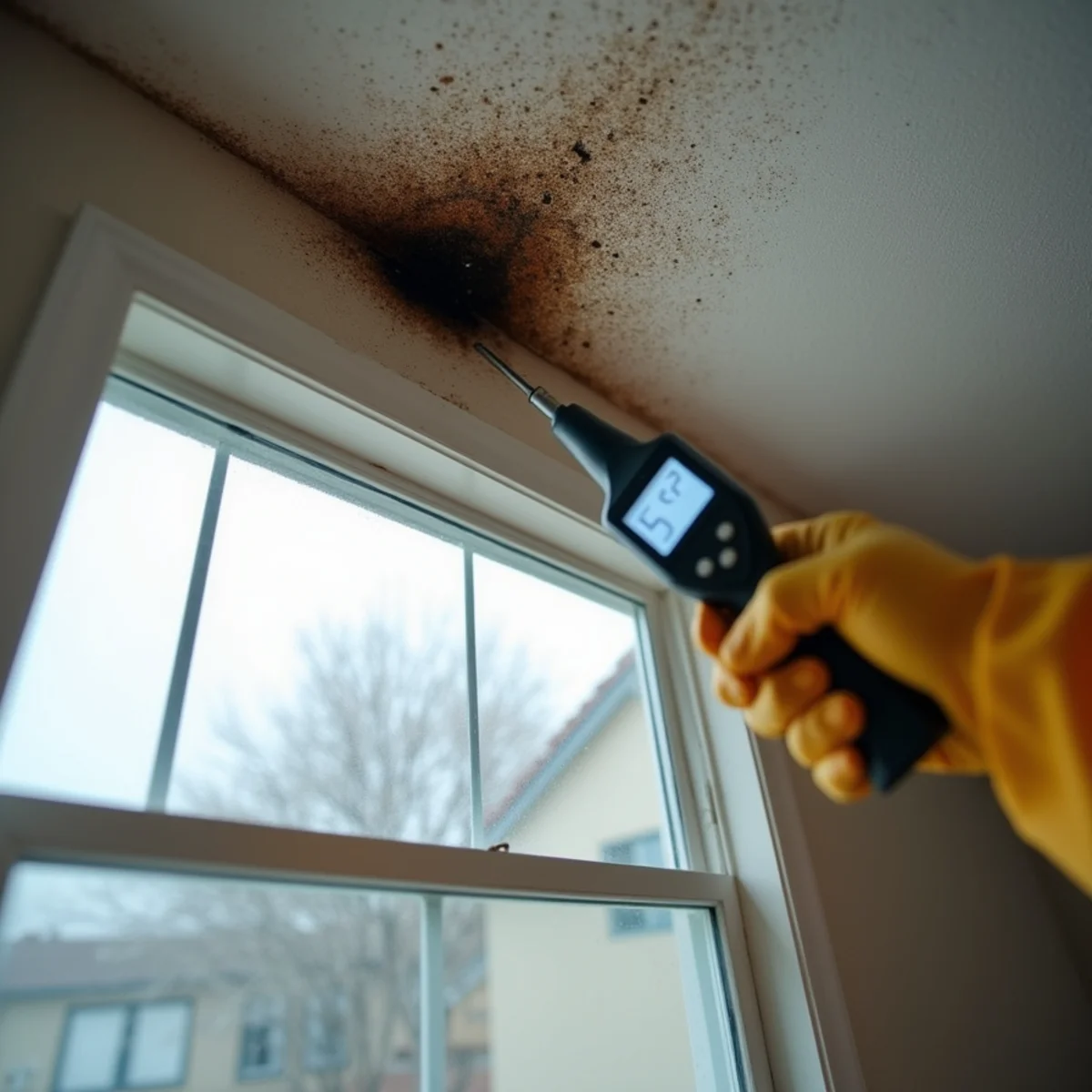
A moisture meter settles most of this in minutes, which is why an attic mold inspection starts with readings, not guesses. If the question is whether the attic is affecting the air in the living space, mold testing can add air samples.
What gets cleaned and what gets replaced
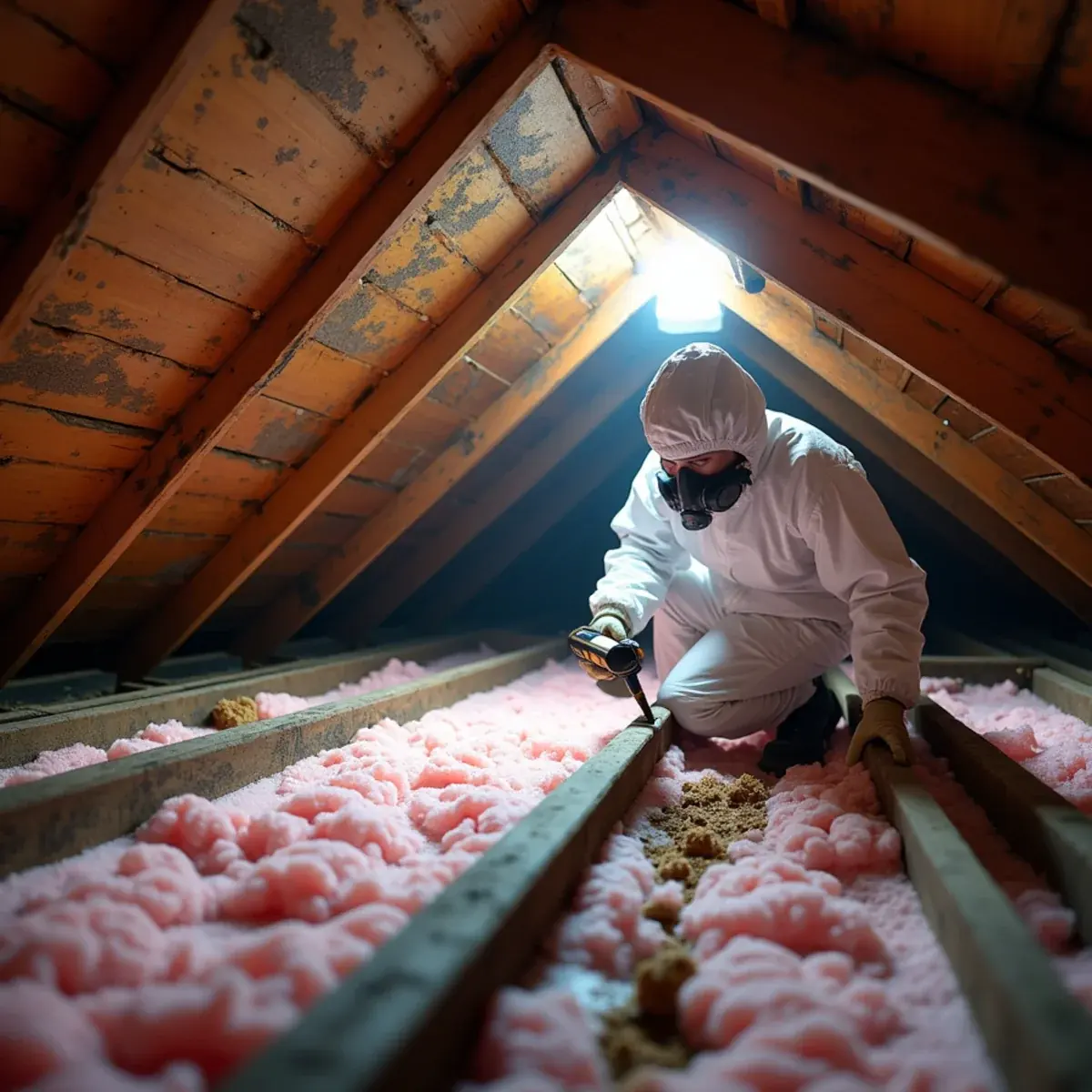
- Sheathing and rafters with surface growth are dried, then cleaned by HEPA vacuuming and sanding, wire brushing or media blasting, and wiped down. A sealant may go on afterward as a final coat, never as a substitute for removal.
- Wet or moldy insulation is removed and replaced. Batts and blown-in insulation cannot be cleaned.
- Soft or delaminated sheathing is replaced, usually by the roofer as part of the roof repair.
- Flex ducts in the attic that got soaked or grew mold are replaced rather than cleaned.
- Ceiling drywall below the leak that dried quickly may only need a stain-blocking primer and paint. Drywall with growth on the back side is cut out.
The attic hatch and any openings into the living space are sealed first, and the work runs under negative air with HEPA filtration, following the containment and removal approach described in IICRC S520. If a leak also soaked walls or ceilings below, that part of the job falls under mold after water damage.
If the furnace or ducts run through the attic
In many Southern California homes the furnace and ducts sit in the attic. If growth or wet insulation is near a return or a leaky duct joint, keep the system off until it is checked, since a return can pull attic air into the rooms below. Ask which ducts and drain pans were inspected, in writing.
Roofer or mold crew: who does what
A roofer stops the water: flashing, underlayment, damaged sheathing and the roof covering. Roofers generally do not clean mold or replace insulation. A mold crew handles the growth, insulation and ventilation findings, and does not repair roofs. Getting the order right avoids paying twice.
- Stop the leak, even if that means a temporary tarp until the roofer can do a permanent repair.
- Document the attic with photos and moisture readings before anything is disturbed.
- Remove wet insulation and clean or remove moldy material under containment.
- Have the roofer replace any rotted sheathing and finish the roof repair.
- Fix the ventilation: reroute bathroom and dryer ducts to the outside and clear the soffit vents.
- Confirm the wood is dry, then install new insulation.
Questions for the roofer
- Will the flashing at the leak be replaced, or only sealed over?
- Is there self-adhered ice and water shield in the valleys and around vent pipes, the chimney and skylights, or only standard underlayment?
- Will you photograph and replace soft sheathing before it is covered?
- Where will the bathroom fan and dryer ducts exit the roof, and who supplies the caps?
Keep the roofer's invoice, ideally noting what failed, with your attic photos and readings. Policies treat mold from a sudden, covered leak differently from long-term seepage, and that paperwork helps show which one you had. See whether homeowners insurance covers mold in California, and check your own policy.
Any job of $1,000 or more in labor and materials that alters the structure needs a CSLB-licensed contractor, so check each company on the CSLB license lookup.
Check your attic after the next storm
A two-minute look with a flashlight after heavy rain catches most of this early: around the chimney, vents and skylights, at the valleys and above bathrooms. Feel for damp insulation and note fresh drips or darkened wood.
If you find growth, a wet spot or a fan duct blowing into the attic, call (831) 303-1192. Buena Park Mold & Water Damage Pros answers 24/7 and connects you with the nearest available independent crew for attic mold removal. Every mold remediation crew we send is licensed where California requires it, and insured. You get the moisture source identified, photos and readings for your file, and a written scope and price before work starts. Call (831) 303-1192 before the insulation goes back in.
Related questions
Is it safe to stay in the house if there is mold in the attic?
Most families stay home during attic mold work, since the attic is sealed off and kept under negative air. Attic air can still reach living space through ceiling gaps and ducts. People with asthma, infants, older adults and anyone with a weakened immune system should avoid the work area and talk to their doctor about symptoms. Mold can trigger allergy and asthma symptoms in some people.
Will a new roof fix attic mold?
A new roof stops future leaks, but it does not remove growth already on the rafters or replace soaked insulation, and if the cause was a bathroom fan venting into the attic or blocked soffit vents, the mold can keep growing under a brand-new roof. Clean or remove the mold while the old sheathing is exposed, and fix the ventilation during the reroof.
Does attic mold need lab testing?
Usually not. If growth is visible and the cause is known, a visual and moisture inspection is enough to plan the work, since the species does not change how it is removed. Testing makes more sense when a home is in escrow, when you suspect attic air is reaching the living space, or when you want clearance samples after the work is done.
What are the signs of attic mold if I never go up there?
From inside the house, watch for a ceiling stain that darkens after rain, a musty smell that is stronger near the attic hatch, ceiling lights or supply registers, and peeling ceiling paint above a shower. Outside, look for staining on the eave boards under a roof valley. None of these proves mold, but each is a reason to put a moisture meter on the attic wood before the next storm.
How long does attic mold removal take?
It depends on the size of the attic, access and whether all the insulation comes out. The waiting is often outside the mold work itself: scheduling the roof repair, an asbestos survey if suspect materials will be disturbed, and confirming the wood reads dry before new insulation goes in. Ask for a written schedule that lists those steps in order, so nothing gets covered up early.